
Why Solar Battery Systems Are Essential for Modern Energy Management
Solar battery systems combine photovoltaic panels with energy storage to capture, store, and deliver clean electricity when you need it most. Here’s what makes them valuable for commercial operations:
Key Benefits:
- Energy Independence: Store excess solar power for use during outages or peak rate periods.
- Cost Savings: Reduce demand charges and time-of-use electricity costs.
- Grid Resilience: Maintain operations during power disruptions.
- Environmental Impact: Maximize clean energy usage and reduce your carbon footprint.
Main Components:
- Solar panels that generate DC electricity
- A battery bank that stores energy (typically lithium-ion)
- An inverter that converts DC to usable AC power
- Smart controls that optimize charging and discharging
According to recent industry data, 13% of solar installations now include battery storage—a percentage that has tripled since 2018 and is expected to double again by 2028. This growth reflects the increasing value businesses see in energy storage. Modern lithium-ion batteries can store about 50% more energy than traditional lead-acid batteries while lasting 5,000 to 8,000 cycles, compared to just 500 for older types.
I’m Rody Jonas, owner of Pure Power Solutions. Since 1993, I’ve helped businesses across Sonoma, Lake, and Mendocino counties implement solar battery systems. My experience has shown me how these systems transform energy costs and reliability for commercial operations.
The Strategic Advantage of Commercial Solar Battery Storage
For any business, maintaining smooth operations and controlling costs are top priorities. Solar battery systems provide a powerful tool to achieve both, changing unpredictable utility bills and power outages into manageable, strategic advantages. With Commercial Solar Battery Storage, you gain control over your energy destiny. When the grid goes down, your operations continue. When electricity rates spike, you draw from your own stored solar power, creating a comprehensive energy strategy that protects your bottom line and supports your environmental goals.
“Energy storage can save consumers money, improve reliability and resilience, integrate renewable energy, create a more flexible and responsive grid, and reduce environmental impacts,” notes the U.S. Department of Energy. See DOE’s overview of energy storage benefits at https://www.energy.gov/energystorage.
Optimizing Energy Consumption and Reducing Utility Costs
Commercial electricity bills are complex, with Time-of-Use (TOU) rates and demand charges that penalize you for using power during peak business hours. TOU rates mean you pay premium prices when your business needs power most, while demand charges penalize you for your highest power usage in any 15-minute window during a billing cycle. A single, brief spike in energy use from starting up heavy machinery can set a high demand charge that impacts your bill for the entire month.
A solar battery system is your secret weapon against these costs. During sunny days, your solar panels generate electricity, and any excess power flows into your battery bank. When afternoon demand charges threaten to spike your bill or TOU rates climb, your system automatically switches to this stored solar power. This strategy, known as peak shaving, can dramatically reduce your monthly energy expenses. We’ve worked with businesses that cut their electricity bills by 70% or more. One manufacturing client in Sonoma County, for example, went from $8,000 monthly electric bills to under $2,000 by using stored solar energy during peak periods.
Beyond simple peak shaving, modern control software can forecast the next day’s solar production and your expected facility load, then pre-charge batteries during low-cost periods to cover the most expensive intervals. This advanced scheduling maximizes savings across:
- Coincident peak events that set utility demand charges
- Late-afternoon and evening TOU peaks
- Short, sudden load spikes from equipment start-ups
Maximizing self-consumption is central to the economics. Instead of selling excess solar to the utility at lower export rates and later buying it back at higher retail prices, you keep that energy onsite and redeploy it when it is most valuable. This is especially critical under modern net billing tariffs where the value of exported energy is significantly lower than the retail rate. For facilities with process heat, refrigeration, compressed air, or large motor loads, this dispatchable energy strategy can be the difference between unpredictable costs and a stable, budgetable energy profile.
Facilities can also use batteries to participate in approved utility or statewide demand-response and load-shifting programs where available. In these programs, you can earn revenue by allowing the utility to draw from your battery during critical grid events. When implemented correctly, storage can provide the fast, precise response required by program rules, creating an additional value stream while maintaining priority for your own operational needs. We design control profiles that always prioritize mission-critical operations over any optional program participation, ensuring that your business continuity is never compromised.
To ensure performance is real and repeatable, we implement measurement and verification best practices. Interval data from your utility meter and submetered circuits feed into the battery management software so savings are verified across seasons and changing rate structures. If your tariff changes, we can quickly update dispatch rules to maintain or improve your ROI.
Achieving Energy Independence and Grid Resilience
Power outages are business disasters, leading to lost productivity, spoiled inventory, and frustrated customers. A well-designed solar battery system acts as your insurance policy against these disruptions. When utility power fails, your system seamlessly transitions to battery backup, keeping critical loads like refrigeration, lighting, and essential machinery running without interruption.
This uninterrupted power supply can even create microgrid potential for larger facilities, allowing you to operate independently from the grid when necessary. A microgrid is a self-sufficient energy system that can disconnect from the traditional grid and operate autonomously. According to the Department of Energy’s research on solar integration, well-designed solar and storage systems can provide reliable power for days during extended outages. The peace of mind from true energy independence is invaluable; some clients report their systems paid for themselves during a single outage by preventing revenue loss. To learn more, see our explanation of How Does a Battery Energy Storage System Work?.
Resilience is not just about riding through a blackout; it is about doing so safely and predictably. Our designs include smart load prioritization to maintain power for your most critical systems while shedding non-essential loads automatically. This prevents over-discharge and extends available runtime. For facilities with sensitive equipment, power quality is maintained through inverter-based voltage regulation and frequency control, helping protect motors, PLCs, and IT infrastructure during transitions on and off grid power.
In short, solar battery systems give you the tools to run your business on your terms—controlling when you buy from the grid, how you avoid peak costs, and how you maintain operations during outages. If you want to take the next step in strategic energy management, explore our Commercial Solar Battery Storage solutions and see how a custom design can align with your operational priorities.
How Solar Battery Technology Works for Your Business
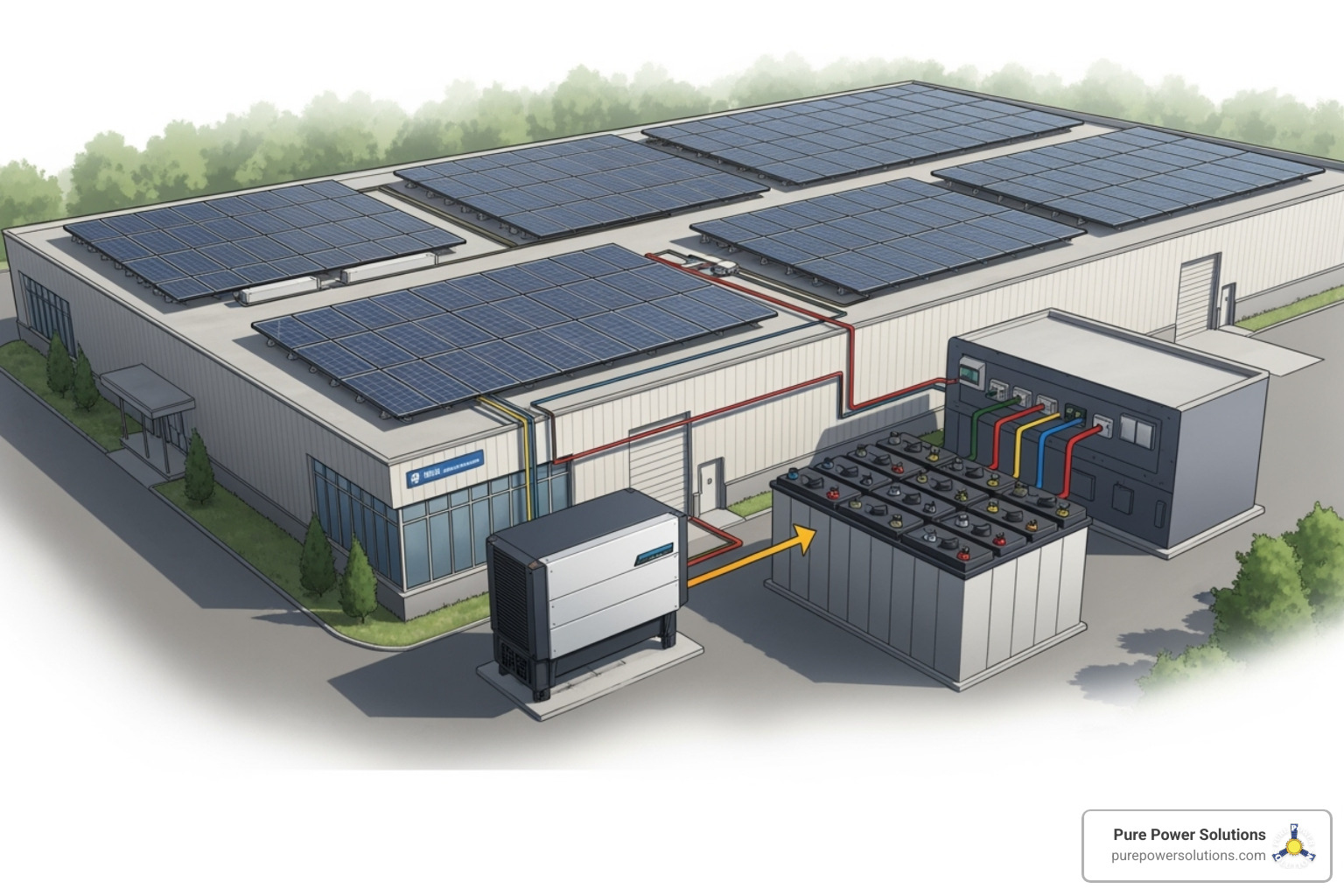
A commercial solar battery system functions as a self-contained power plant for your business. Photovoltaic panels capture sunlight and convert it into direct current (DC) electricity. An inverter then converts this DC power into the alternating current (AC) that runs your facility. The Battery Management System (BMS) acts as the brain, optimizing how energy is generated, stored, and used. The BMS is a critical component that ensures the safety, longevity, and efficiency of the battery bank by continuously monitoring its state and protecting it from operating outside its safe limits. It manages cell balancing, temperature control, and fault detection to maximize the system’s lifespan.
The Synergy Between Solar Panels and Batteries
The system intelligently manages your energy flow. When your solar panels produce more electricity than your facility needs, the automated control system directs this excess solar generation to your battery bank for storage. This storing energy process happens automatically. When the sun sets, clouds appear, or your energy demand increases, the system seamlessly begins discharging power from the battery, ensuring your operations continue without interruption. This intelligent load management maximizes the value of every kilowatt-hour your panels produce, as detailed in the Department of Energy’s guide on Solar integration: solar energy and storage basics.
On a typical day, your controller will:
- Monitor facility load in real time and predict short-term power needs
- Prioritize on-site solar consumption to reduce grid imports
- Charge batteries during lower-cost or low-demand periods
- Discharge batteries to avoid TOU peaks and demand spikes
- Maintain reserve capacity for backup power based on your resilience targets
Grid-Tied vs. Off-Grid Solar Battery Systems for Commercial Use
Choosing the right configuration is a key strategic decision for your business.
Grid-tied systems with battery backup offer the best of both worlds for most businesses. You remain connected to the utility grid, but when an outage occurs, your system transitions to backup-only mode, using stored battery power and ongoing solar production to keep critical operations running. These hybrid systems automatically isolate your facility from the grid during an outage for safety, allowing you to stay operational while others are not. This capability to “island” from the grid and form a stable, self-sufficient microgrid is a core component of modern energy resilience.
Off-grid solar battery systems provide complete energy independence, which is ideal for remote facilities or businesses seeking total self-sufficiency. These systems rely entirely on solar production and battery storage to meet all energy needs, offering unparalleled full off-grid capability. They are engineered for extreme reliability, with redundancy built in to handle periods of low solar generation. You can learn more about these robust solutions on our Off-Grid Solar Systems page.
The choice is strategic: grid-tied systems often have faster payback periods, while off-grid systems provide maximum security. We can design flexible systems that meet your current needs and allow for future expansion.
Controls, Compliance, and Safety You Can Trust
For commercial environments, safety, code compliance, and interoperability are essential. Our designs prioritize:
- UL 9540-certified energy storage systems and enclosures for comprehensive system safety
- UL 1741 SB/IEEE 1547-2018 compliant inverters for advanced grid support and communication
- Anti-islanding and seamless transfer to backup operation during outages
- Rapid shutdown functionality in accordance with NEC 690.12 to ensure firefighter safety
- Energy storage installation practices aligned with NEC Article 706 and NFPA 855, the Standard for the Installation of Stationary Energy Storage Systems
We also consider siting, ventilation, and clearances for battery rooms or containers, with attention to egress, temperature control, and fire safety planning consistent with local AHJ requirements. This includes thermal management to keep batteries within their optimal temperature range, which is crucial for both performance and longevity. Where appropriate, we integrate microgrid controllers for advanced functions like prioritized load shedding, black start (restarting the facility without the grid), and coordinated dispatch of multiple distributed energy resources.
Cybersecure, Data-Driven Operations
Your solar battery system produces a continuous stream of operational data. We enable secure, remote monitoring so your team and ours can view key performance indicators, state of charge, and event logs. When permitted, the system can also respond to published utility signals or day-ahead price forecasts to refine dispatch. We favor simple, robust control schemes first—and then layer in more advanced features only when they add clear value. The result is a system that is both easy to operate and capable of sophisticated performance when you need it.
If you want a deeper dive into system intelligence and dispatch strategies, explore our educational overview: How Does a Battery Energy Storage System Work? And for commercial deployment options custom to your operations, visit our Commercial Solar Battery Storage page.
Selecting the Right Commercial Solar Battery Systems
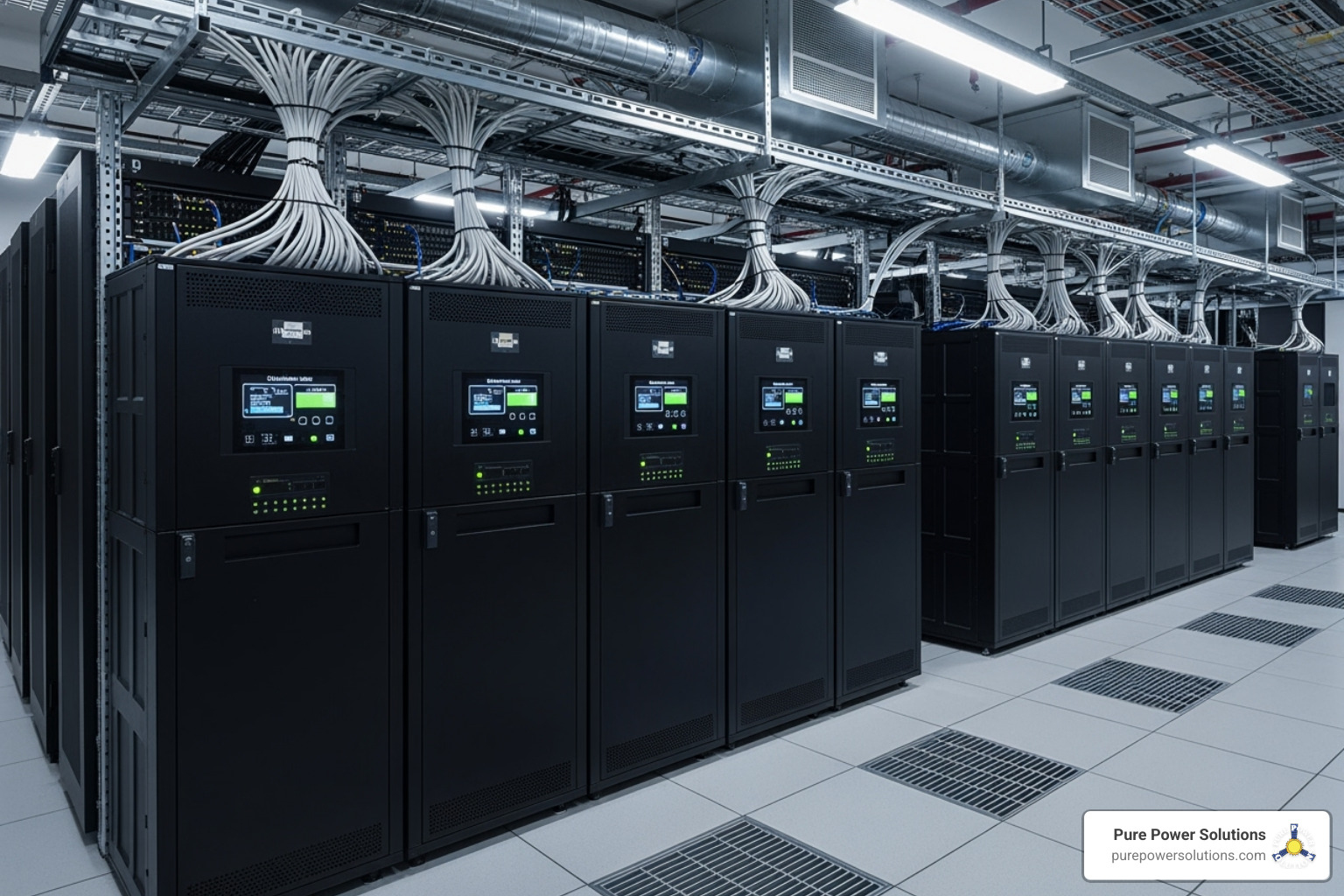
Selecting the right solar battery system requires a design that matches your business’s unique energy demands and future growth plans. We begin every project with a detailed load analysis, examining your facility’s energy usage patterns, peak demand, and critical systems to design a system that performs optimally for you.
Comparing Battery Chemistries: Lithium-Ion vs. Lead-Acid
For commercial applications, lithium-ion batteries are the superior choice over older lead-acid technology. The table below highlights the key differences.
| Feature | Lithium-Ion (LFP) | Lead-Acid (Sealed Lead-Acid – SLA) |
|---|---|---|
| Lifespan (Cycles) | 5,000 – 8,000 cycles | 500 – 1,500 cycles |
| Depth of Discharge (DoD) | 80% – 100% | 50% – 60% |
| Efficiency | 90% – 98% | 70% – 85% |
| Upfront Cost | Higher | Lower |
| Maintenance | Minimal to none | Regular (e.g., watering, equalization charging) |
Lithium Iron Phosphate (LFP) batteries offer a lifespan of 15-20 years, a higher usable capacity (Depth of Discharge), and greater efficiency. LFP chemistry is also incredibly stable, ensuring maximum safety and performance for commercial installations. While lead-acid batteries have a lower upfront cost, their shorter lifespan, lower capacity, and maintenance needs make lithium-ion a better long-term investment.
Key Considerations for Your Business’s Solar Battery Systems
Designing the right system involves several key specifications:
- Capacity (kWh): The total energy your batteries can store, which determines how long you can run on battery power. This is sized based on your daily consumption and backup needs.
- Power Rating (kW): The amount of electricity the system can deliver at one time. This must be sufficient to run all necessary equipment simultaneously.
- Round-Trip Efficiency: Modern lithium-ion systems are over 90% efficient, meaning very little energy is lost during charging and discharging.
- Lifespan and Warranty: Systems are rated for thousands of cycles (e.g., 6,000 cycles is about 16 years of daily use) and are backed by strong warranties, typically 10 years or more.
Sizing and Maintenance Requirements
Proper sizing is the foundation of a successful project and goes far beyond a simple review of utility bills. Our process starts with a comprehensive energy audit. We analyze at least 12-24 months of your electrical usage data to understand seasonal variations and identify your baseline consumption. When necessary, we install temporary data loggers to capture high-resolution, 15-minute interval data, revealing the true nature of your load profile and demand peaks.
Next, we work with your facility managers to perform a critical load analysis—a detailed inventory of the equipment that absolutely must stay online during an outage. This includes everything from servers and security systems to refrigeration units and essential production machinery. This analysis determines the minimum power (kW) and energy (kWh) capacity required for your desired level of resilience.
Crucially, we also plan for system expandability. Your business is not static, and your energy system shouldn’t be either. We discuss your future plans, such as adding an electric vehicle (EV) charging fleet, expanding your facility, or electrifying process equipment. The system is then designed with a modular approach, allowing you to easily add more battery capacity or solar generation in the future without a complete system overhaul.
Modern lithium-ion solar battery systems require minimal maintenance. The enclosed, self-contained units have no user-serviceable parts. Monitoring software tracks performance, temperature, and state of health in real-time, and can automatically alert us to any potential issues, often before they impact performance. This proactive, data-driven approach ensures the system quietly and reliably supports your business operations for decades.
Financials and Future-Proofing Your Investment
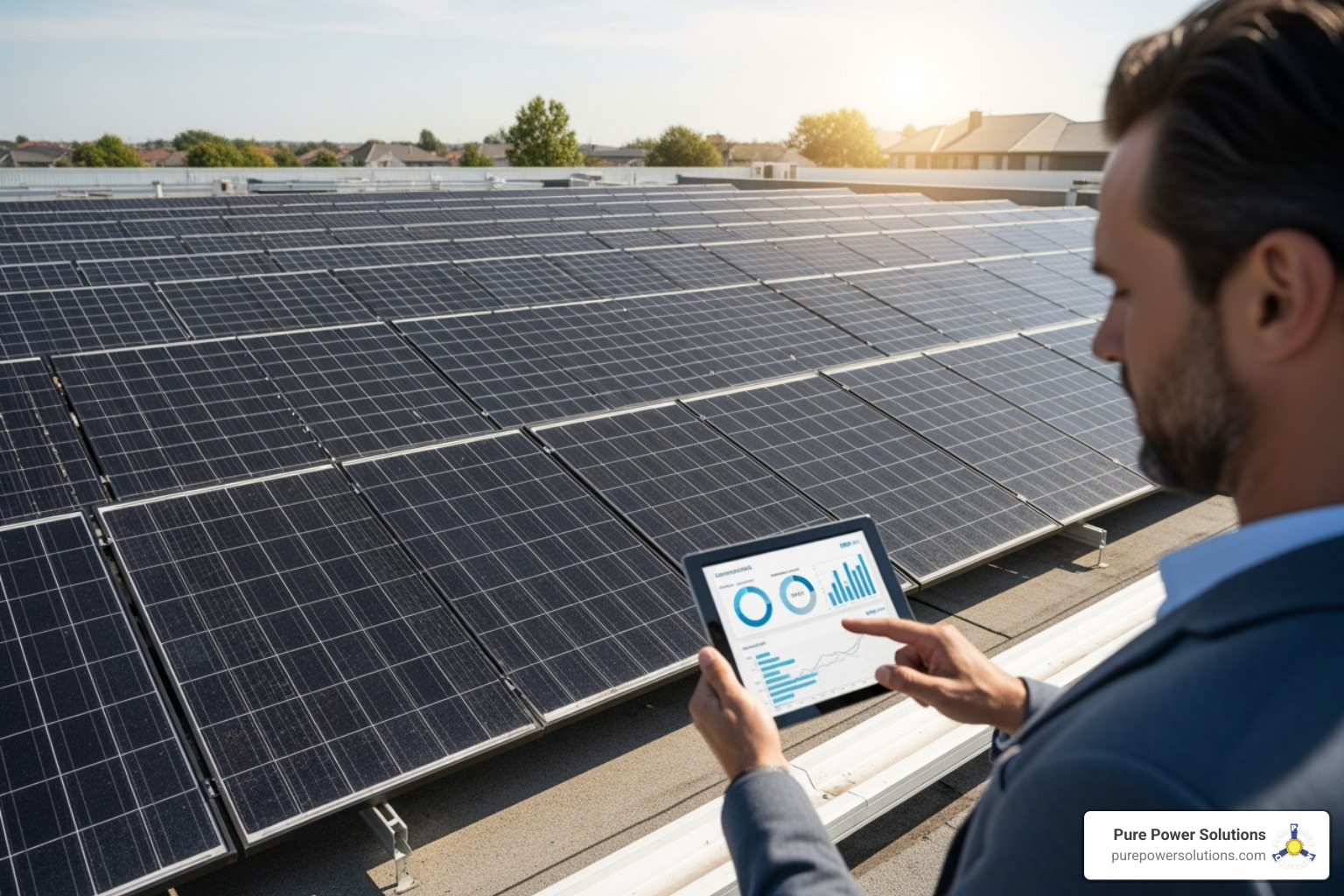
The financial case for solar battery systems is compelling. The return on investment goes beyond simple bill reductions to include avoided costs from power outages, protection against rising electricity rates, and the value of energy independence. A properly designed system can dramatically cut energy costs and eliminate losses from grid instability, making it a smart investment in your business’s total cost of ownership.
Cost Implications and Available Incentives
While the upfront investment in a solar battery system varies by size and complexity, the long-term value is clear. Financial incentives significantly improve the project economics.
In addition to the federal tax credit, many businesses qualify for state and local rebates and accelerated depreciation. Combined with the system longevity of modern batteries and solar panels, most commercial clients see a payback period of four to seven years. After that, they benefit from decades of low-cost, reliable electricity, insulating them from rising utility rates.
To round out the financial picture, consider how these factors interact in a typical analysis:
- Demand charge reduction: Batteries reduce the single highest 15-minute interval in the billing cycle and can target multiple coincident peaks.
- Time-of-Use arbitrage: Charge during off-peak, discharge during peak, and keep sufficient reserve for resilience.
- Outage cost avoidance: Quantify avoided spoilage, overtime, lost production, and customer service impacts.
- Incentives and depreciation: In addition to the 30% ITC, most commercial solar projects are eligible for accelerated depreciation (MACRS), allowing the business to deduct the asset’s value over a five-year schedule, which significantly improves the project’s after-tax return. (Consult your tax professional for guidance specific to your business).
We model these variables using your interval load data and current tariffs to produce scenarios that compare payback and net present value under different operating strategies. Because rates and operating patterns change, our monitoring and software updates help keep your project optimized over time.
Starting early preserves schedule flexibility and allows time for any utility interconnection requirements.
Emerging Trends in Solar Battery Technology
The technology landscape is evolving rapidly, ensuring your investment remains valuable. Key advancements include:
- Solid-state and sodium-ion batteries: These future chemistries promise greater energy density, improved safety, and lower costs by using more abundant materials than lithium.
- Smart battery software: Using machine learning, modern systems optimize charging and discharging based on usage patterns, weather forecasts, and utility rates to maximize savings.
- Vehicle-to-Grid (V2G) and Vehicle-to-Building (V2B) integration: This emerging technology allows electric vehicle fleets to act as mobile energy storage. V2B can power your facility during an outage, while V2G can provide power back to the grid, creating new revenue streams.
- Virtual Power Plants (VPPs): By aggregating multiple distributed battery systems, VPPs can participate in energy markets and provide grid services at scale, offering another potential value stream for system owners.
These technology advancements mean the system you install today is a forward-thinking investment that will become more valuable over time. Our commercial design approach emphasizes standards-based hardware and open integration pathways so you are not locked into a single operating paradigm as new capabilities become available.
Conclusion
Your business deserves the energy independence and cost savings that solar battery systems deliver. By combining solar panels with modern lithium-ion battery technology, you can achieve predictable energy costs, reliable backup power, and a reduced environmental footprint. Stop worrying about peak demand charges and power outages; it’s time to take control of your energy future.
At Pure Power Solutions, we have spent 30 years designing and installing renewable energy systems for businesses throughout Sonoma, Napa, Mendocino, and Lake Counties. We don’t use cookie-cutter solutions. Instead, we take the time to understand your specific needs and design a custom system that fits your operations perfectly. Our reputation is built on transparent communication and delivering systems that perform reliably for decades.
Whether you need a grid-tied system with battery backup or a complete off-grid solution for a remote facility, we have the expertise to make it happen. Our specialized Services: Off-Grid Solar Energy Storage Systems are just one example of how we help businesses achieve true energy independence.
Don’t let high electricity bills and grid instability dictate your success. Take control with a custom-designed solar battery system.
Contact Pure Power Solutions today for a free consultation. Visit our website at https://purepowersolutions.com or call us at (707) 433-6556.


