

Why the Solar Tax Credit Infrastructure Bill Matters for Your Business
The solar tax credit infrastructure bill, officially known as the Inflation Reduction Act (IRA), has fundamentally transformed commercial solar incentives since its passage in 2022. This landmark legislation offers businesses unprecedented opportunities to reduce energy costs while building sustainable operations.
Key Benefits of the Solar Tax Credit Infrastructure Bill:
- 30% base Investment Tax Credit for commercial solar installations
- Bonus credits up to 50% for projects meeting specific criteria
- Direct Pay options for tax-exempt organizations
- Transferability allowing businesses to sell credits for cash
- Extended timeline through 2032 with potential extensions
- Battery storage eligibility for energy resilience
- Streamlined depreciation benefits
The IRA represents the most significant federal investment in clean energy in U.S. history, allocating $369 billion specifically for climate initiatives. Unlike previous solar incentives that faced constant uncertainty, this legislation provides long-term stability that businesses need for strategic planning.
For commercial property owners, the financial impact is substantial. A typical 100kW commercial solar system costing $300,000 can now qualify for a $90,000 tax credit under the base 30% rate – with potential for even higher savings through bonus credits.
Rising energy costs continue to challenge businesses across all sectors. Commercial electricity rates have increased 13.7% in the past year alone, making solar installations more attractive than ever for cost-conscious business owners.
As Rody Jonas, owner of Pure Power Solutions with over 30 years of experience in renewable energy systems, I’ve witnessed how the solar tax credit infrastructure bill has revolutionized commercial solar adoption across Sonoma, Napa, and surrounding counties. My expertise in navigating these complex incentives has helped countless businesses maximize their solar investments while achieving energy independence.
Quick look at solar tax credit infrastructure bill:

Understanding the Inflation Reduction Act: A Landmark Bill for Commercial Solar
The Inflation Reduction Act represents a turning point for American businesses considering solar energy investments. This solar tax credit infrastructure bill didn’t just tweak existing policies – it completely rewrote the rules of the game, replacing years of uncertainty with a solid, decade-long commitment to clean energy incentives.

For too long, businesses watched solar incentives come and go like seasonal sales events. One year the credits were there, the next year they might disappear or get reduced. The IRA changed all that by creating a framework that businesses can actually count on for strategic planning.
According to The White House’s overview of the IRA’s clean energy provisions, this legislation aims to cut greenhouse gas emissions by 40% by 2030 while creating hundreds of thousands of high-paying jobs in the clean energy sector. That’s not just good news for the environment – it’s great news for businesses ready to be part of the solution.
The solar tax credit infrastructure bill provides the kind of long-term stability that CFOs and business planners love. Instead of wondering whether solar incentives will still exist next year, businesses in Sonoma, Napa, Mendocino, and Lake County can now make confident investments knowing the federal support will be there through 2032 and beyond.
What are the IRA’s primary energy policy goals for businesses?
The legislation wasn’t designed in a vacuum – it targets specific goals that create real opportunities for forward-thinking businesses. Understanding these goals helps explain why the incentives are so generous and why they’re structured the way they are.
Decarbonization sits at the heart of the IRA’s mission. Commercial buildings account for a significant portion of America’s carbon footprint, making business solar installations crucial for meeting national climate targets. When your business goes solar, you’re not just saving money – you’re contributing to a larger environmental goal that benefits everyone.
Onshoring manufacturing gets a major boost through the domestic content bonus credits. The IRA rewards businesses that choose American-made solar equipment with additional tax benefits. This creates a win-win situation where your business gets extra savings while supporting domestic manufacturing jobs.
Job creation in the clean energy sector is exploding thanks to the IRA. The BLS data on projected solar installer job growth shows solar photovoltaic installers as one of the fastest-growing occupations, with projected growth of 52.1% between 2020 and 2030. This growth strengthens local economies throughout our service areas.
Energy security becomes increasingly important as businesses face grid instability and rising electricity costs. The IRA encourages distributed solar generation, helping businesses reduce their dependence on the traditional grid while improving their energy resilience. This is particularly valuable for businesses in rural areas or those requiring uninterrupted power supply.
Lowering commercial energy costs remains the most immediate benefit for most businesses. With electricity demand projected to grow by 130% by 2030 due to expanding data centers and new manufacturing facilities, businesses that invest in solar now can lock in predictable energy costs for decades to come.
How the IRA Restructured Commercial Solar Incentives
Before the IRA, navigating commercial solar incentives felt like trying to plan a vacation while the airlines kept changing their flight schedules. The previous Investment Tax Credit faced constant uncertainty, with frequent expirations and step-down schedules that created artificial urgency but made long-term planning nearly impossible.
The solar tax credit infrastructure bill swept away this uncertainty by completely restructuring how commercial solar incentives work. Instead of the previous declining credit schedule, the IRA restored the full 30% Investment Tax Credit for commercial solar projects and locked it in through 2032.
But the real game-changer came with the introduction of bonus credits. These “adder” credits can stack on top of the base 30% credit, potentially increasing total tax benefits to 50% or more for qualifying projects. Suddenly, businesses weren’t just getting a decent tax break – they were looking at incentives that could cover half their solar installation costs.
The legislation also created technology-neutral credits starting in 2025 through new Section 48E (Investment Tax Credit) and Section 45Y (Production Tax Credit). These apply to all clean electricity technologies, giving businesses even more flexibility in designing their energy systems.
Perhaps most importantly, the IRA enabled direct pay and transferability options. For the first time, businesses can monetize tax credits directly through cash payments for tax-exempt entities or by selling credits to third parties. This change has opened up entirely new financing models for commercial solar projects.
The result? Businesses now have the certainty they need to make smart, long-term investments in solar energy, backed by the most comprehensive clean energy legislation in American history.
A Deep Dive into Commercial Solar Tax Credits: ITC and PTC

The solar tax credit infrastructure bill gives businesses two primary paths to monetize a solar project: the Investment Tax Credit (ITC) and the Production Tax Credit (PTC). Deciding which works best depends on your company’s tax position, cash-flow needs, and system size.
The Investment Tax Credit (ITC)
- 30 % base credit on eligible project costs
- Applies the year the system is placed in service—no performance risk
- Covers PV modules, inverters, racking, installation labor, interconnection fees, and battery storage (≥ 5 kWh)
Because the ITC delivers value up front, it is usually the better fit for small-to-mid-sized commercial arrays that want to trim capital expenses quickly. For more detail, see how the federal solar tax credit works.
The Production Tax Credit (PTC)
- Pay-as-you-generate credit for the first 10 years of operation
- 2024 base rate ≈ $27 per MWh, adjusted annually for inflation
- Works best for large rooftop or ground-mount projects that expect high annual output
The PTC can yield a higher cumulative benefit for megawatt-scale systems, especially where site conditions support strong production.
Bonus Credits That Stack With ITC or PTC
Under the IRA, projects can add multiple 10 % “adder” credits, potentially taking total benefits to 50 % or more:
- Domestic Content Bonus – use U.S-made steel, iron, and manufactured products.
- Energy Community Bonus – locate the array in a qualifying census tract with a coal or fossil-fuel legacy. Check your site with the DOE mapping tool.
Example: A $300,000 commercial array claims the 30 % ITC ($90,000). Add domestic content (+10 %) and energy-community (+10 %) bonuses and the credit jumps to $150,000—half of the total project cost.
Projects larger than 1 MW that pursue adders must meet prevailing wage and apprenticeship rules, but most businesses find the additional paperwork well worth the extra 20 % credit.
Choosing the Right Path
- Project size: ITC favors smaller arrays; PTC often wins for multi-MW systems.
- Tax liability: Limited tax appetite? Choose ITC and sell unused credits (see Section 3). Ample tax appetite? Evaluate both options.
- Risk tolerance: ITC is fixed the day the system goes live, while PTC varies with production.
Pure Power Solutions runs side-by-side financial models for every commercial client so you can see, in dollars, which option maximizes ROI under the solar tax credit infrastructure bill.
Key Eligibility & Monetization Rules for Your Business
Understanding the eligibility requirements and monetization options under the solar tax credit infrastructure bill is crucial for maximizing your solar investment’s financial benefits. The IRA introduced several game-changing provisions that make solar more accessible to businesses of all sizes, and frankly, these changes have revolutionized how we approach commercial solar financing.
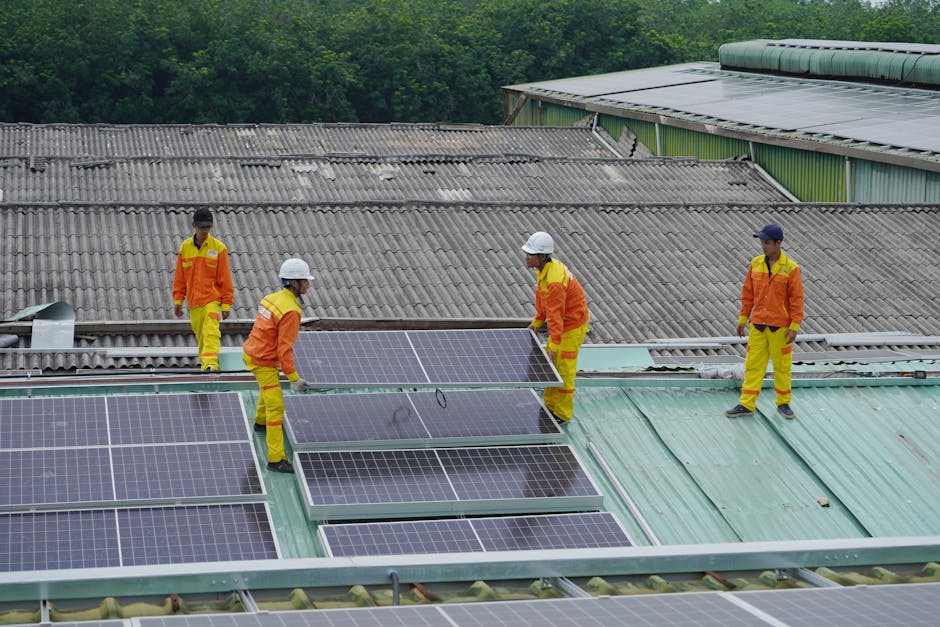
The new rules might seem complex at first glance, but they’re actually designed to make solar incentives work for more businesses than ever before. Whether you’re a small local business or a large corporation, these provisions create pathways to access the full value of your solar investment.
Direct Pay and Transferability: A Game Changer for Monetizing Credits
Here’s where things get really exciting. One of the most aspects of the IRA is how it enables businesses to access the cash value of tax credits, even without sufficient tax liability to use them directly. This was a major barrier in the past that kept many businesses from going solar.
Direct Pay opens doors for tax-exempt organizations like nonprofits, government entities, and other tax-exempt organizations. These groups can now receive direct cash payments equal to the value of their tax credits. Think about it – schools, hospitals, and community organizations that previously couldn’t benefit from solar incentives can now get the same financial advantages as for-profit businesses.
Transferability creates new opportunities for for-profit businesses by allowing them to sell their tax credits to unrelated third parties for cash. Most businesses can expect to receive 85-95% of the credit’s face value, which creates immediate cash flow and dramatically simplifies project financing.
This transferability feature eliminates the need for complex tax equity partnerships that were previously required for businesses without sufficient tax appetite. The benefits of credit transferability include immediate cash flow that converts tax credits to cash within months of system commissioning, simplified financing that removes the need for traditional tax equity investors, reduced transaction costs compared to complex tax equity deals, and faster project development through streamlined financing.
The impact on project economics is substantial. Instead of waiting years to realize tax benefits or navigating complicated financing structures, businesses can now access most of their incentive value upfront, making solar projects more attractive and financially viable.
Navigating Domestic Content and Energy Community Requirements
The bonus credit system rewards businesses that support American manufacturing and invest in communities transitioning away from fossil fuels. These requirements might seem daunting, but they’re actually straightforward once you understand the basics.
Energy Communities represent a significant opportunity for businesses in our service areas. The DOE’s mapping tool to determine Energy Community eligibility helps businesses determine if their project location qualifies for the 10% bonus credit. Many areas in Sonoma, Napa, Mendocino, and Lake County qualify as Energy Communities.
Brownfield sites include former industrial or commercial properties with potential environmental contamination. Former coal communities encompass areas with significant coal mining history, coal plant closures, or coal-dependent employment. Statistical areas cover regions with high fossil fuel employment and above-average unemployment rates.
The good news is that many businesses in our region automatically qualify for Energy Community bonuses simply based on their location. This means an extra 10% tax credit without any additional effort or requirements.
Domestic content requirements offer another 10% bonus for projects using American-made materials. To qualify, projects must meet specific thresholds for domestic manufacturing. Steel and iron must be produced entirely in the United States, while manufactured products must meet increasing percentage requirements over time.
The domestic content thresholds start at 40% of total costs from domestic manufactured products in 2024, increasing to 45% in 2025 and 50% in 2026. While these requirements add complexity to procurement, they often align with businesses’ preferences for supporting American manufacturing and can result in higher-quality components.
How the solar tax credit infrastructure bill supports battery storage and EV charging
The IRA significantly expanded incentives beyond solar panels to include complementary technologies that create comprehensive energy solutions for businesses. This broader approach recognizes that modern commercial energy systems require more than just solar panels.
Standalone energy storage now qualifies for the full 30% Investment Tax Credit for battery systems with 5 kWh or greater capacity. This means businesses can add storage to existing solar systems or install standalone storage for grid services and backup power, all while qualifying for substantial tax benefits.
Co-located systems that combine solar and battery storage qualify for the ITC on the entire system, including any applicable bonus credits. This creates powerful incentives for businesses to invest in energy resilience and grid independence from the start.
The commercial EV charging credit provides a 30% tax credit for EV charging infrastructure, up to $100,000 per charging station. This complements solar installations perfectly, enabling businesses to power their fleet charging with clean energy while capturing additional tax benefits.
Creating complete energy solutions through the combination of solar, storage, and EV charging delivers multiple benefits. Businesses achieve energy independence through reduced reliance on grid electricity, realize cost savings through self-generation and time-of-use optimization, gain environmental benefits from reduced carbon footprint, and can offer employee benefits through workplace EV charging.
For more information about solar-related tax benefits, visit More info about solar-related taxes.
The beauty of this integrated approach is that each component improves the others. Solar panels generate clean electricity, batteries store it for use when needed, and EV chargers provide a valuable service while consuming the clean energy you’ve generated. Each piece of the puzzle comes with its own tax incentives, creating a comprehensive financial package that makes the entire system more attractive.
Frequently Asked Questions about the Commercial Solar Tax Credit
Can my business still claim credits for a system installed in 2025 or later?
Yes. The IRA locks in the 30 % ITC through 2032. Beginning in 2025, you may elect the technology-neutral Section 48E credit. Even if credits begin to phase down after 2032, commercial projects keep a permanent 10 % credit, giving planners long-term certainty.
Which costs qualify for the commercial ITC?
Eligible expenses include:
- PV modules, inverters, optimizers, racking, wiring, and monitoring
- Labor, permitting, inspections, and utility interconnection fees
- Battery storage (≥ 5 kWh) installed with, or added to, a commercial solar array
- Site prep directly related to system installation
The credit is taken in the tax year the system is placed in service. If you sell or retire the array within five years, a portion of the credit may be recaptured.
ITC vs. PTC—how do we decide?
- Need upfront savings? Use the ITC and cut cap-ex immediately.
- Building a large, high-output system? The PTC’s 10-year stream can out-earn the ITC.
- Limited tax appetite? Claim the ITC, then sell unused credits (Section 3 explains transferability).
A quick pro-forma comparing both scenarios—factoring in bonus adders, depreciation, and projected production—usually makes the better choice obvious. Pure Power Solutions performs this analysis at no additional cost for every commercial client.
Conclusion: Power Your Business’s Future with Solar
The solar tax credit infrastructure bill has opened doors that simply didn’t exist before for businesses across Sonoma, Napa, Mendocino, and Lake County. This isn’t just another tax incentive – it’s a fundamental shift in how businesses can approach energy costs and environmental responsibility.
Think about it: with the 30% base Investment Tax Credit and potential bonus credits reaching 50% or more, you’re looking at unprecedented savings on what might be your largest operating expense. A typical commercial solar installation that would have cost $300,000 can now qualify for up to $150,000 in tax credits. That’s real money that stays in your business instead of going to the utility company.
The beauty of this legislation lies in its long-term stability through 2032 and beyond. Unlike previous solar incentives that kept businesses guessing with constant expirations and changes, the solar tax credit infrastructure bill provides the certainty you need to make confident investment decisions. You can plan your energy future without worrying about the rug being pulled out from under you.
But here’s where it gets really interesting. The IRA doesn’t just cover solar panels – it creates opportunities for complete energy solutions. Battery storage systems qualify for the same generous credits, giving your business the resilience to weather power outages and the flexibility to optimize energy costs. Add EV charging infrastructure with its own 30% credit, and you’re building an integrated energy system that serves your business, your employees, and your community.
The bonus credit system rewards businesses that make choices aligned with national priorities. Choose American-made equipment and earn an extra 10% domestic content bonus. Install your system in one of the many qualifying energy communities in our region and earn another 10% energy community bonus. These aren’t just feel-good incentives – they’re substantial financial benefits that can make the difference between a good investment and a great one.
What makes this even more compelling is the transferability option. If your business doesn’t have enough tax liability to use all the credits directly, you can sell them to other companies for cash. This eliminates one of the biggest barriers that previously prevented smaller businesses from accessing solar incentives.
However, navigating these opportunities requires more than just understanding the basics. The difference between claiming the standard 30% credit and maximizing bonus credits can mean tens of thousands of dollars in additional savings. Requirements for prevailing wages, apprenticeship programs, and domestic content compliance aren’t just bureaucratic problems – they’re pathways to significantly higher returns on your solar investment.
At Pure Power Solutions, we’ve been helping businesses harness solar energy for over 30 years. We’ve seen policy changes come and go, but nothing compares to the comprehensive support provided by the solar tax credit infrastructure bill. Our expertise in commercial solar installations, battery storage systems, and off-grid solutions means we understand not just the technology, but the financial strategies that maximize your incentives.
We handle the complex details so you can focus on running your business. From determining energy community eligibility to coordinating with domestic suppliers for bonus credits, we ensure you capture every available incentive. Our personalized approach means your solar system is designed specifically for your business needs, your site conditions, and your financial objectives.
The window of opportunity created by this legislation is substantial, but it won’t remain static forever. Policy landscapes evolve, and the businesses that act now secure the best available incentives while positioning themselves for decades of energy independence and cost savings.
Your business deserves the financial benefits, energy security, and environmental leadership that commercial solar provides. With the solar tax credit infrastructure bill making these benefits more accessible than ever, there’s never been a better time to take control of your energy future.
Contact us to learn more about our commercial solar installation services and find how we can help your business harness the full power of the solar tax credit infrastructure bill to achieve energy independence, substantial cost savings, and environmental leadership that sets you apart in your industry.


