
Why Commercial Solar is Changing Business Operations
The Compelling Financial Case for Commercial Solar
When decision-makers evaluate solar panels for business premises, the first metric they examine is financial performance. Commercial solar delivers a rare combination of deep cost reductions, predictable future expenses, and generous tax advantages—all of which add up to a compelling business case.
Slashing Operational Costs and Hedging Against Rate Hikes
Electricity is often a top-five operating expense for Northern California companies. By generating your own power, you can cut those bills by 75 – 100 %. One recent installation for a Sonoma warehouse lowered its monthly utility charge from $1,950 to $500, saving roughly $348,000 over 20 years. Because your electricity is effectively “pre-purchased” at today’s prices, you are insulated from the 4–6 % annual utility-rate increases reported by the U.S. Energy Information Administration.
Net-metering further sweetens the deal. Surplus midday production flows to the grid and earns bill credits that offset evening or seasonal consumption, giving you the flexibility of a virtual battery without the capital cost.
Open uping Powerful Tax Incentives and Depreciation
The federal Investment Tax Credit (ITC) allows a 30 % write-off of the total project cost through 2032. A $250,000 system therefore generates an immediate $75,000 credit. Commercial owners may also depreciate the system under MACRS—or use 100 % bonus depreciation in the first year—often eliminating another $37,000-plus in taxable income. Reference tables and current rules are maintained at the U.S. Department of Energy’s official ITC guide.
Calculating ROI and Payback Period
Typical commercial arrays in Sonoma, Napa, Mendocino, and Lake counties return 10 – 20 % annually and achieve payback in 3–7 years. For example, a winery that invests $250,000, receives $75,000 in ITC savings, and cuts $48,000 a year from its power bill nets a real cost of $175,000. At that savings rate, breakeven occurs in 3.6 years; over 25 years the lifetime cash-flow tops $1 million.
Key variables influencing ROI:
- Local electricity rate (higher rates improve payback)
- System size and equipment pricing
- On-site consumption profile (day-time loads benefit most)
- Stacking of federal, state, and utility incentives
Exploring Your Financing Options
| Financing Option | Upfront Cost | Ownership | Typical ROI | Best For |
|---|---|---|---|---|
| Cash Purchase | Highest | You | Highest | Firms with strong balance sheets |
| Solar Loan | Low/Med | You | High | Businesses that want depreciation & ITC without tying up cash |
| Power Purchase Agreement (PPA) | None | 3rd-Party | Moderate | Tenants or firms prioritizing zero capital outlay |
Innovative mechanisms such as Property Assessed Clean Energy (PACE) financing or SBA 504 green loans can also close funding gaps for small and medium enterprises.
Beyond the Bottom Line: Operational and Reputational Advantages
While the financial benefits of commercial solar are compelling, the operational and reputational advantages often prove equally valuable for businesses looking to build long-term success.
Enhancing Energy Independence and Resilience
Energy independence isn’t just about cost savings—it’s about business continuity and operational resilience. When your business generates its own power, you’re less vulnerable to grid outages, rolling blackouts, and utility company decisions that could disrupt your operations.
This resilience is particularly valuable for businesses in Sonoma, Napa, Mendocino, and Lake counties, where Public Safety Power Shutoffs (PSPS) have become increasingly common during high fire-risk periods. While your competitors may be forced to close during these events, your business can continue operating with solar power and battery storage.
Solar paired with battery storage creates a microgrid that can power critical operations during outages. This capability is especially important for businesses that:
- Operate refrigeration or cold storage facilities
- Provide essential services to the community
- Have security systems that must remain operational
- Process time-sensitive orders or manufacturing
We’ve seen businesses use their solar resilience as a competitive advantage, attracting customers who value reliability and continuity of service. One manufacturing client told us their solar system allowed them to fulfill orders during a three-day power outage, while their competitors had to turn away business.
Boosting Your Brand with Corporate Social Responsibility (CSR)
Today’s consumers and employees increasingly prefer to do business with environmentally responsible companies. A 2017 Unilever survey found that over a third of consumers will opt for brands demonstrating concern for environmental impact. Similarly, a 2015 Harvard study showed that companies with practical approaches to improving sustainability significantly outperform their peers.
Installing solar panels for business premises provides tangible evidence of your environmental commitment. This isn’t just about marketing—it’s about building authentic relationships with stakeholders who share your values. Benefits include:
- Customer attraction: Eco-conscious consumers actively seek out sustainable businesses
- Employee pride: Workers take satisfaction in contributing to environmental solutions
- Competitive differentiation: Stand out in crowded markets through environmental leadership
- Regulatory compliance: Stay ahead of emerging environmental regulations
- Investor appeal: ESG (Environmental, Social, Governance) criteria increasingly influence investment decisions
The environmental impact is substantial. A typical 250kWp solar PV system offsets approximately 64 tonnes of CO2 annually—equivalent to removing 155,000 miles of driving in a petrol car from the atmosphere. Over the system’s lifetime, this environmental benefit compounds significantly.
Increasing Commercial Property Value
Solar installations represent a capital improvement that adds measurable value to commercial properties. Unlike many business investments that depreciate over time, solar systems maintain their value and continue generating returns for decades.
Property value benefits include:
- Lower operating costs: Reduced utility expenses make properties more attractive to tenants and buyers
- Long-term asset: Solar systems have 25-30 year lifespans, providing decades of value
- LEED certification: Solar installations can contribute points toward LEED certification
- Market differentiation: Properties with solar stand out in competitive real estate markets
- Tenant attraction: Businesses increasingly seek sustainable office and retail spaces
For property owners, solar can justify higher rents due to lower operating costs for tenants. For owner-occupiers, solar represents a strategic investment that improves both operational efficiency and property value.

Your Roadmap to Installing Solar Panels for Business Premises
Moving from curiosity to a live, power-producing asset is easier than many executives expect. Pure Power Solutions follows a streamlined process that keeps projects on time and on budget.
1. Initial Assessment (2–4 weeks)
We pull 12 months of utility data, review roof or ground-mount space, and discuss business goals such as resilience or fleet electrification. This step identifies right-sizing opportunities and flags any roof upgrades that should coincide with the project.
2. Engineering & Design (1–2 months)
Structural and electrical engineers translate your goals into a stamped set of drawings: module layout, conduit routes, interconnection details, and projected production based on the National Renewable Energy Laboratory’s PVWatts® model.
3. Permitting & Utility Approval (1–2 months)
We manage every form and inspection with counties in Sonoma, Napa, Mendocino, or Lake, plus the interconnection paperwork with PG&E. Our familiarity with each authority having jurisdiction (AHJ) keeps this phase predictable.
4. Installation (1–6 weeks)
Crew scheduling is coordinated around your operations—often during off-peak hours—to minimize disruption. Most mid-size commercial roofs are completed in under a month.
5. Commissioning & Training (Few days)
After the final utility sign-off, we energize the system, walk your facilities team through monitoring software, and hand over a digital owner’s manual.
Is Solar a Good Fit for My SME?
Absolutely—especially in energy-intensive sectors such as light manufacturing, food processing, and cold storage prevalent across Northern California. Systems in the 15–50 kW range cost $38,000–$175,000 before incentives yet frequently deliver five-figure annual savings, accelerating growth and freeing capital for hiring or equipment upgrades.
Long-Term Ownership: Maintenance, Lifespan, and Innovations
Investing in solar panels for business premises means thinking long-term. Understanding maintenance requirements, system lifespan, and emerging technologies helps ensure you maximize your investment over decades.
Understanding Maintenance, Upkeep, and Lifespan
One of the most attractive aspects of commercial solar is its low maintenance requirements. Solar panels have no moving parts, making them remarkably reliable and durable.
Routine Maintenance Requirements:
- Cleaning: Periodic cleaning to remove dust, debris, and bird droppings. Professional cleaning costs range from $300-$630 annually.
- Inspections: Annual professional inspections typically cost around $150 and help identify potential issues before they become problems.
- Monitoring: Modern systems include monitoring capabilities that alert you to performance issues immediately.
- Inverter maintenance: Inverters may require replacement after 10-15 years, but newer models are increasingly reliable.
System Lifespan and Warranties:
Most commercial solar panels come with 25-year performance warranties and can operate effectively for 25-30 years or more. High-quality panels degrade at approximately 0.5% per year, meaning they’ll still produce about 87% of their original capacity after 25 years.
Performance Monitoring:
We install comprehensive monitoring systems that track energy production, system performance, and potential issues. This allows for proactive maintenance and ensures optimal performance throughout the system’s lifetime.
Navigating Potential Challenges and Downsides
While commercial solar offers tremendous benefits, it’s important to understand potential challenges:
High Upfront Investment: Initial costs can range from $100,000 to $500,000 for larger systems. However, financing options and tax incentives significantly reduce the net investment.
Weather Dependency: Solar production varies with weather conditions and seasons. However, California’s abundant sunshine minimizes this concern, and battery storage can provide additional reliability.
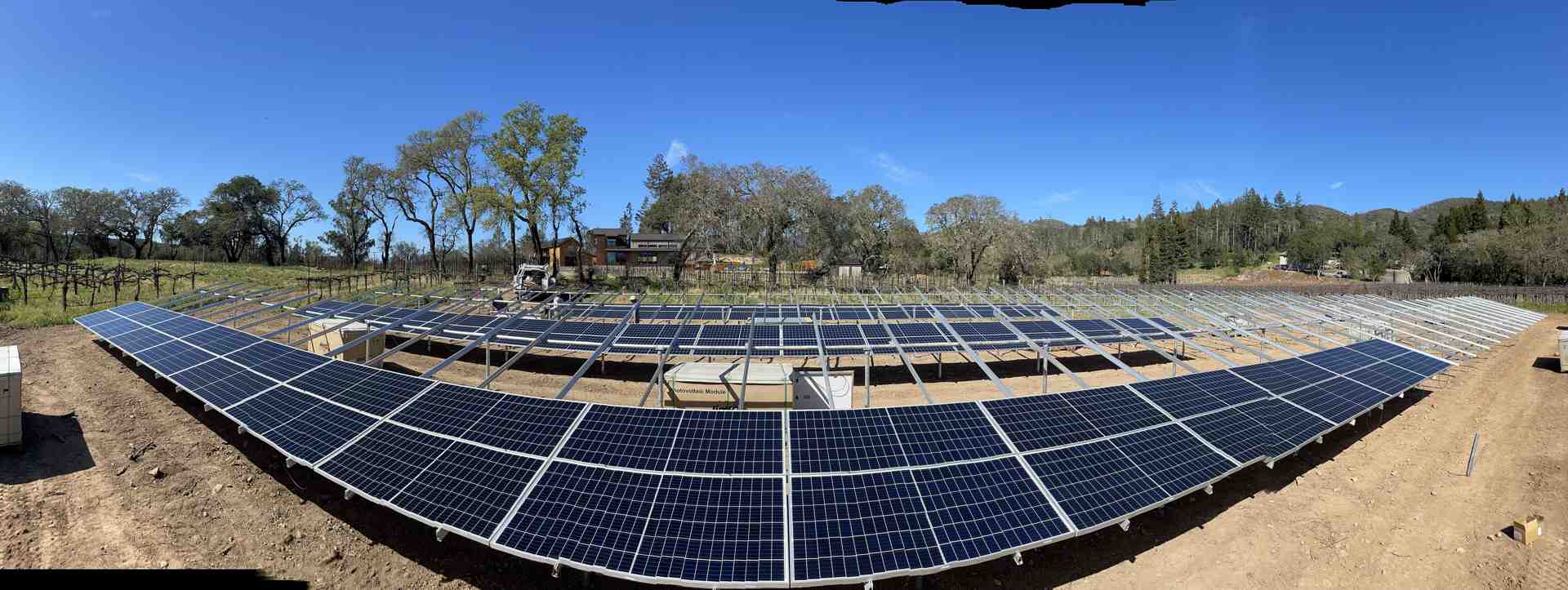
Space Requirements: Commercial systems require significant roof or ground space. We work with clients to optimize available space and explore creative solutions like solar carports or ground-mounted arrays.
Permitting Complexity: Commercial installations involve more complex permitting than residential systems. Our experience navigating local regulations ensures smooth project approval.
Roof Condition: Older roofs may need repair or replacement before solar installation. We assess roof condition during the initial site evaluation and provide recommendations.
The key to overcoming these challenges is working with an experienced installer who can anticipate and address potential issues before they become problems.
The Latest Technological Innovations in Commercial Solar
The solar industry continues to evolve rapidly, with new technologies enhancing system performance and value:
Bifacial Solar Panels: These panels capture sunlight from both sides, increasing energy production by up to 30% in ideal conditions. They’re particularly effective in commercial applications with reflective surfaces.
Building-Integrated Photovoltaics (BIPV): Solar panels integrated directly into building materials, such as solar roof tiles or facades. This technology offers aesthetic benefits while generating power.
Solar Tracking Systems: Motorized systems that follow the sun throughout the day can increase energy production by up to 25%. While more complex, they’re cost-effective for larger installations.
Advanced Battery Storage: Lithium-ion battery technology continues improving, with longer lifespans, higher energy density, and lower costs. Battery storage enables greater energy independence and grid resilience.
Smart Energy Management: AI and IoT technologies optimize energy consumption, storage, and grid interaction. These systems can automatically adjust energy usage based on production, demand, and utility rates.
Perovskite Solar Cells: Emerging technology that promises higher efficiency and lower costs. While still in development, perovskite cells could revolutionize solar panel performance.
At Pure Power Solutions, we stay current with these innovations and help clients evaluate new technologies that could improve their solar investments.
Frequently Asked Questions
How much do commercial solar panels cost?
Budgets vary by size, but most companies spend $2.50 – $3.50 per watt before incentives. A 40 kW system suitable for a Mendocino production facility, for example, lands near $120,000 up-front—then drops to about $84,000 after the 30 % ITC, with further reductions from MACRS depreciation.
How long do commercial solar panels last?
Tier-1 modules carry 25-year performance guarantees and typically remain productive for 30 years or more. Annual degradation is only about 0.5 %, so after a quarter-century you still receive roughly 87 % of nameplate output.
What happens to excess energy my business generates?
Under California’s net-metering rules, surplus kilowatt-hours flow to the grid and create bill credits that offset usage at other times. Companies seeking full energy autonomy can add lithium-ion storage so that extra power charges a battery instead, providing backup during Public Safety Power Shutoffs.
Can my business install solar if we lease the building?
Yes—provided the landlord approves the improvement. Many property owners welcome solar because it raises asset value and lowers common-area charges. Power Purchase Agreements are popular on leased sites because they require no capital outlay and avoid ownership questions at lease end.
Conclusion: Powering Your Business’s Future
The change happening across Northern California’s business landscape is remarkable. From small agricultural operations in Mendocino County to manufacturing facilities in Sonoma County, solar panels for business premises have become the smart choice for forward-thinking business owners who want to take control of their energy future.
After three decades in the renewable energy industry, I’ve witnessed this evolution firsthand. What started as an environmental statement has become a strategic business decision that delivers measurable returns year after year. The numbers don’t lie: businesses consistently reduce energy costs by 75-100%, achieve impressive ROI of 10-20%, and recoup their investment within just 3-7 years.
But the benefits extend far beyond the bottom line. Solar provides the energy independence that shields your business from volatile utility rates and unexpected outages. It demonstrates environmental leadership that resonates with customers and employees alike. Most importantly, it gives you control over one of your largest operational expenses for the next 25-30 years.
At Pure Power Solutions, we’ve helped hundreds of businesses across Sonoma, Napa, Mendocino, and Lake counties make this transition. Every project teaches us something new about the unique challenges and opportunities that different industries face. Whether you’re running a small retail operation worried about rising overhead costs or managing a large facility focused on sustainability goals, we’ve seen how the right solar solution can transform both profitability and peace of mind.
The timing couldn’t be better. With federal tax credits at 30% through 2032, technology more advanced than ever, and financing options that work for businesses of all sizes, the barriers to solar adoption have never been lower. The agricultural businesses we work with often tell us they wish they’d made the switch sooner, especially when they see how much money they could have saved over the years.
What makes this investment particularly compelling is its long-term nature. Unlike most business expenses that disappear the moment you pay them, solar panels continue generating value for decades. They’re working for you every sunny day, quietly reducing your costs and improving your bottom line while you focus on what you do best—running your business.
The path forward is clearer than ever. With our personalized approach, we handle everything from initial assessment through decades of reliable operation. We’ve steerd the permitting process in every county we serve, worked with local utilities on countless interconnection agreements, and helped businesses optimize their energy management strategies.
Your business deserves the energy security and cost savings that solar provides. The question isn’t whether solar makes sense for your operation—it’s how quickly you can start benefiting from this proven technology. Every month you wait is another month of paying unnecessarily high utility bills instead of investing in your company’s future.


