

Navigating Your Solar Tax Benefits
How to claim solar tax credit in 2025 is a straightforward process that can significantly reduce your tax burden while supporting your investment in clean energy. Although you should always consult with your tax professional, here’s a quick summary:
- Determine eligibility – You must own (not lease) your solar system
- Complete IRS Form 5695 – Calculate your renewable energy credit
- Transfer to Schedule 3 – Add the credit amount to your Form 1040
- File with your tax return – Submit all forms together
- Keep documentation – Save all receipts and solar system certification
The solar tax credit (officially the Residential Clean Energy Credit) allows homeowners to deduct 30% of the cost of installing solar energy systems from their federal taxes. This substantial incentive makes going solar more affordable while reducing your carbon footprint.
As a homeowner in Northern California, you’re perfectly positioned to take advantage of both abundant sunshine and these generous tax incentives. The combination of year-round solar production and the 30% federal credit creates a powerful financial opportunity.
I’m Rody Jonas, owner of Pure Power Solutions, and I’ve helped hundreds of homeowners across Sonoma County steer the process of how to claim solar tax credit 2025 while designing renewable energy systems that maximize their tax benefits and energy savings.
Understanding the Solar Tax Credit
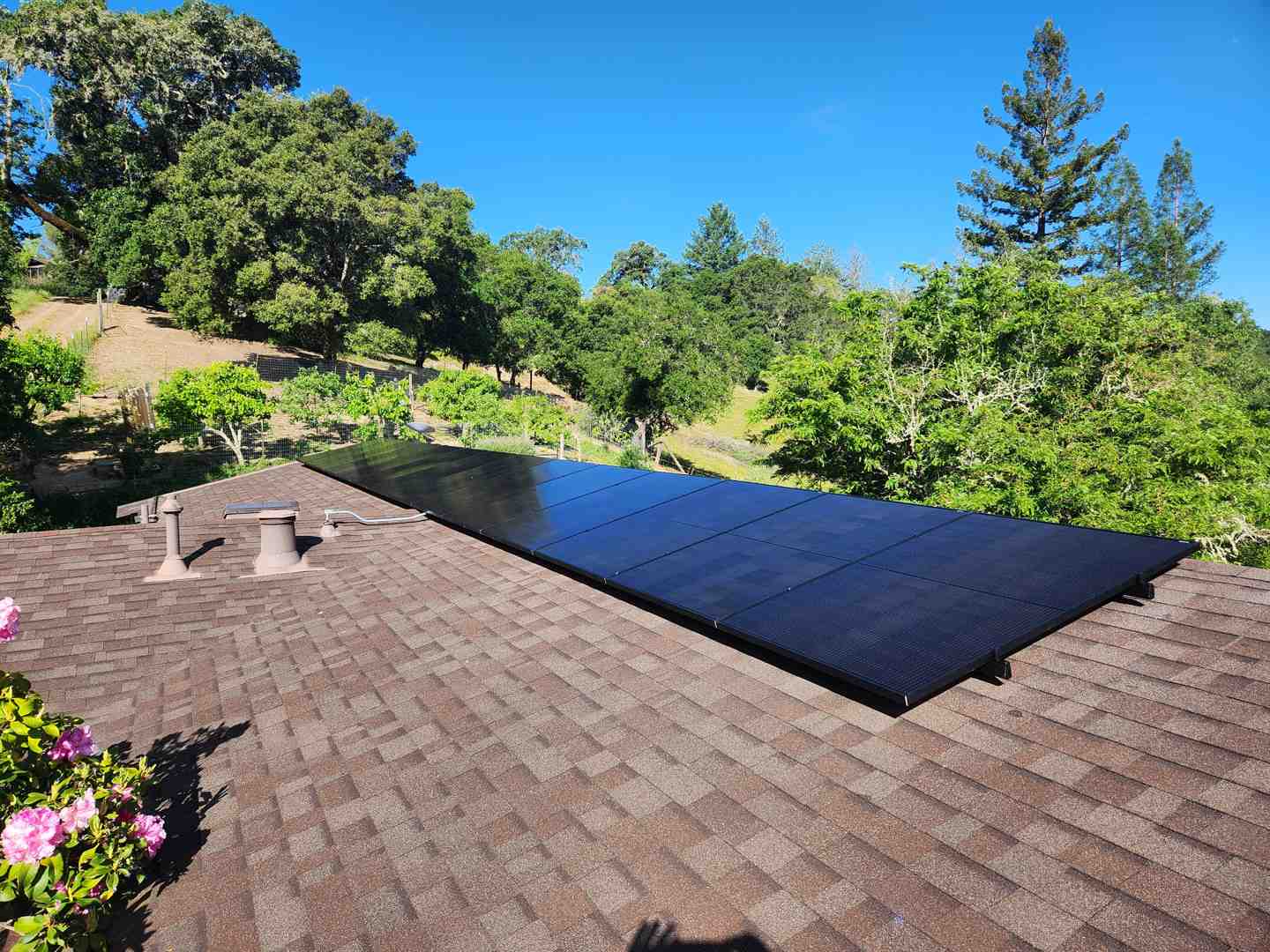
The federal solar tax credit – officially called the Investment Tax Credit (ITC) – is truly a game-changer for homeowners thinking about embracing solar energy. When clients ask me about how to claim solar tax credit 2025, I always start by explaining just how valuable this incentive really is.
Thanks to the Inflation Reduction Act that passed in August 2022, this remarkable benefit got even better. The credit now stands at a generous 30% of your total qualified solar installation costs. That’s nearly a third of your investment coming back to you through reduced taxes!
Let me put this in real dollars: if your solar system installation costs $20,000 (about average for many of our Northern California homes), you’d be looking at a $6,000 tax credit. And this isn’t just a deduction that reduces your taxable income – it’s a credit that directly lowers what you owe the IRS, dollar-for-dollar. For many families, that’s the difference between a tax bill and a tax refund.
Although the original legislation locked in the 30% tax credit, our current Congress and Administration is working toward ending that at the end of 2025. The legislation is not yet complete, but, savvy homeowners are making arrangements to take advantage of the 30% tax credit before the end of 2025.
Here at Pure Power Solutions, we’ve helped hundreds of homeowners across Sonoma, Napa, Marin, Mendocino, and Lake County take full advantage of this credit. Time and again, we’ve seen how this incentive transforms solar from a “someday” dream into an immediate, practical investment that starts paying dividends from day one.
The best part? Nearly all residential solar installations qualify, making this benefit accessible to virtually every homeowner who purchases (rather than leases) their system. It’s one of those rare opportunities where doing the right thing for the planet also happens to be the right thing for your wallet.
How to Claim Solar Tax Credit 2025
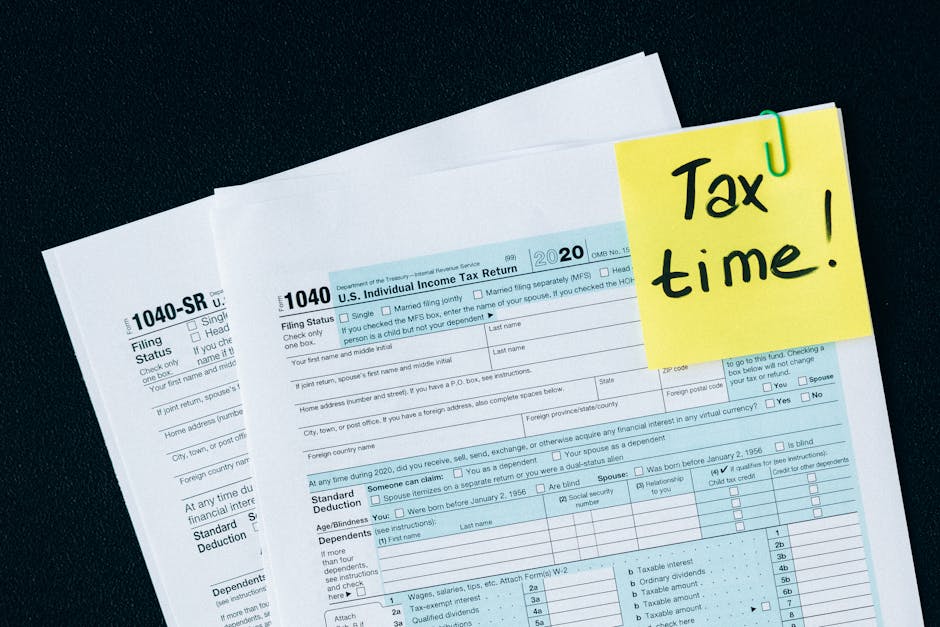
Let’s face it – tax paperwork isn’t anyone’s idea of fun, but when it puts thousands of dollars back in your pocket, it’s worth the effort! How to claim solar tax credit 2025 doesn’t have to be complicated, and I’m here to walk you through it step by step.
Step 1: Determine Eligibility
Before pulling out those tax forms, let’s make sure you qualify:
You need to own your solar system outright – leased systems don’t count for this credit. Your beautiful new panels must be installed at your primary or secondary home in the United States, and they need to have been installed during the tax year you’re claiming. This credit is only available for the original installation of new equipment.
Here in Northern California, our Pure Power Solutions team provides all our clients with clear documentation showing exactly when your system was “placed in service” – that’s tax-speak for when your system was ready to generate electricity. This date is crucial for determining which tax year you can claim your credit.
Step 2: Complete IRS Form 5695
This form is your golden ticket to solar savings! Here’s how to tackle it:
Find Part I of Form 5695 and enter your total solar electric property costs on line 1. Then skip down to line 5 and enter that same amount again. On line 6, multiply line 5 by 0.30 (that’s your 30% credit rate) to calculate your potential credit. From there, just follow the remaining calculations to determine your final allowable credit.
When tallying up your qualified expenses, don’t shortchange yourself! Include everything from the panels themselves to mounting equipment, inverters, wiring, and even battery storage systems (as long as they’re charged exclusively by your solar array). Labor costs count too – preparation, assembly, installation – along with permitting fees, inspection costs, and developer fees.
Being thorough with how to claim solar tax credit 2025 can make a significant difference in your return. I’ve seen clients nearly forget to include permitting costs, which would have left hundreds of dollars on the table!
For detailed instructions on completing Form 5695, you can visit the official IRS website where they provide the latest form version and comprehensive filing guidelines.
Step 3: Add to Schedule 3 and Form 1040
You’re in the home stretch now! Once Form 5695 is complete:
Transfer your credit amount from line 30 of Form 5695 to line 5 of Schedule 3 (Form 1040). Then include Schedule 3’s total on your Form 1040. Make sure to file all these forms together with your tax return – keeping them separated is like sending half a love letter!
Over my years helping Northern California homeowners go solar, I’ve found that taking a few extra minutes to double-check your forms can save headaches down the road. When in doubt, consult with your tax professional – they’re there to help you maximize this valuable benefit.
Qualified Expenses for the Solar Tax Credit

When you’re figuring out how to claim solar tax credit 2025, knowing exactly what expenses qualify can make a big difference in your tax savings. I’ve helped hundreds of homeowners across Northern California maximize their credits by carefully tracking every eligible expense.
The good news is that the IRS allows quite a comprehensive list of solar-related costs to be included. Your solar photovoltaic panels are just the beginning – the entire system installation brings tax benefits.
Beyond the panels themselves, your mounting equipment and racking systems that secure everything to your roof or ground mounts are fully eligible. The inverters that transform your solar-generated DC power into usable AC electricity for your home also qualify, along with all the wiring and electrical components that tie the system together.
Many of our clients are surprised to learn that battery storage systems qualify too, as long as they’re charged exclusively by your solar panels. This is especially valuable for our clients in areas like western Sonoma County who experience frequent power outages.
The credit doesn’t just cover equipment. All those labor costs – from the initial site preparation to the final installation and even professional fees – are included in your 30% credit calculation. The same goes for permitting fees, inspection costs, and developer fees that are part of getting your system approved and operational.
Even the sales taxes you pay on these eligible expenses can be rolled into your credit calculation – something many homeowners overlook when estimating their potential tax benefit.
For our off-grid clients nestled in the more remote corners of Mendocino and Lake County, we take extra care documenting all components of these more complex systems. When you’re fully independent from the grid, every qualifying expense matters.
One question we often hear concerns roof work. While a complete roof replacement generally doesn’t qualify, there’s a gray area worth exploring. If certain portions of roof work are necessary specifically for your solar installation, that portion might be eligible. During our site assessment, we can help determine what percentage of any roof work might reasonably qualify based on your specific situation.
At Pure Power Solutions, we provide all our clients with comprehensive documentation of every qualified expense, making it much easier when tax season arrives and you’re ready to claim your credit. This attention to detail is just one way we ensure you receive the maximum benefit from your investment in clean energy.
Frequently Asked Questions about Solar Tax Credit
What is the Federal Solar Tax Credit Income Limit?
Here’s the refreshing truth: there is no income limit for the federal solar tax credit. Whether you’re a high-earning executive in Marin County or a retired teacher in Lake County, you can claim the full 30% credit on your solar investment. The sunshine doesn’t discriminate, and neither does this tax benefit!
I’ve worked with clients across all income brackets throughout Northern California, and I’ve seen how this universal eligibility makes solar a smart financial move for virtually everyone. The only real requirement is having sufficient tax liability to use the credit (though don’t worry – any unused portion can be carried forward to future years).
Why Am I Not Getting My Full Solar Tax Credit?
If you’re scratching your head over a smaller-than-expected tax credit, the most common culprit is insufficient tax liability. Since this is a non-refundable credit, it can reduce what you owe the IRS to zero, but Uncle Sam won’t be sending you a check for any amount beyond that.
Several other issues might be standing between you and your full how to claim solar tax credit 2025 benefits:
Ownership matters – If you’re leasing your system or have a power purchase agreement (PPA), you’re not eligible for the credit – the company that owns the equipment gets that benefit.
Paperwork problems – Even small mistakes on Form 5695 can result in reduced credits. I’ve helped many clients through this paperwork maze over my 30 years in the solar industry.
Timing is everything – Your system must be “placed in service” (fully operational) during the tax year you’re claiming. Installing in December? Make sure that final inspection happens before New Year’s!
At Pure Power Solutions, we take time to review your specific tax situation so you understand exactly what to expect when filing for your credit.
What Proof Do I Need for a Solar Tax Credit?
While you won’t need to mail in a stack of documentation with your tax return, keeping comprehensive records is crucial in case the IRS comes knocking. Think of it as insurance for your tax credit.
Smart homeowners keep these items in a safe place:
- Your contract and purchase agreement with us
- Detailed receipts and invoices showing itemized costs
- Manufacturer’s certification statements confirming your equipment qualifies
- Building permits and inspection documents
- Your interconnection agreement with the utility (for grid-tied systems)
For our clients from Healdsburg to Ukiah and everywhere in between, we provide a complete documentation package with everything needed to support your tax credit claim. It’s part of our commitment to making your solar journey as smooth as possible – from installation to tax time.
For more information about renewable energy tax incentives, you can check out the Department of Energy’s guide to federal tax credits which provides additional details about qualifying technologies and credit calculations.
I’ve seen too many DIY solar customers scramble at tax time trying to gather proper documentation. When you work with an established local company like ours, this paperwork comes organized and ready for your tax preparer or your own filing needs.
Conclusion
Figuring out how to claim solar tax credit 2025 is genuinely straightforward when you understand the steps and have your paperwork in order. With the generous 30% federal tax credit now extended through 2032, there’s never been a better time to harness the California sunshine while putting thousands of dollars back in your pocket.
The process we’ve outlined—determining eligibility, completing Form 5695, and transferring the credit to your tax return—might seem technical at first glance, but it’s a small effort compared to the substantial rewards. Many of our clients are pleasantly surprised by how simple the process becomes with the right guidance and documentation.
At Pure Power Solutions, we’ve spent the last three decades helping Northern California families steer both the technical and financial aspects of renewable energy. We’re not just installing solar panels; we’re helping create a sustainable future for our beautiful region while maximizing your financial benefits.
When you work with us, you’re getting more than equipment on your roof. You’re partnering with neighbors who understand the unique needs of homes in Sonoma, Napa, Marin, Mendocino, and Lake County. Whether you’re dealing with redwood shade in Occidental, fog in Bodega Bay, or the intense summer heat of Lake County, we design systems that perform optimally in your specific microclimate.
We take pride in our personalized approach—no cookie-cutter solutions here. From your first consultation to helping you gather documentation for your tax credit, we’re with you every step of the way. And yes, we’ll even help you understand exactly which of your expenses qualify for that valuable 30% credit!
Ready to turn those sunny days into both clean energy and substantial tax savings? Let’s chat about how a custom-designed solar system can work for your home and budget. After all, the best time to go solar is when you can save 30 cents on every dollar you invest—and that time is now.


