

Why Commercial Solar Battery Installation is Critical for Today’s Businesses
Commercial solar battery installation is changing how businesses manage energy costs and achieve sustainability goals. As utility rates continue climbing and power outages become more frequent, companies need reliable energy solutions that deliver both financial savings and operational resilience.
Here’s what commercial solar battery installation offers businesses:
- Cost Reduction: Slash electricity bills by up to 90% through demand charge management and peak shaving
- Energy Independence: Store excess solar power for use during peak rate periods or outages
- Financial Incentives: Access 30% federal tax credits and accelerated depreciation benefits
- Business Continuity: Maintain operations during grid outages with reliable backup power
- Sustainability Goals: Reduce carbon footprint and improve corporate social responsibility
Rising utility costs and unpredictable energy expenses are forcing businesses to rethink their energy strategies. Commercial solar battery installation provides a strategic solution that stores solar energy during peak production hours and releases it when needed most. This technology helps companies avoid expensive demand charges – which can represent up to 50% of a commercial electricity bill – while providing backup power during outages.
The process involves integrating battery energy storage systems with your solar panels, creating an intelligent energy management system that automatically optimizes power usage based on your business needs and utility rates. Modern battery systems include advanced monitoring software that tracks performance and maximizes savings around the clock.
I’m Rody Jonas, owner of Pure Power Solutions, and I’ve been helping businesses across Northern California implement commercial solar battery installation solutions since 1993. With over 30 years of experience in renewable energy systems, I’ve seen how the right battery storage system can transform a company’s energy costs and operational resilience.
What is Commercial Solar Battery Storage and How Does It Work?
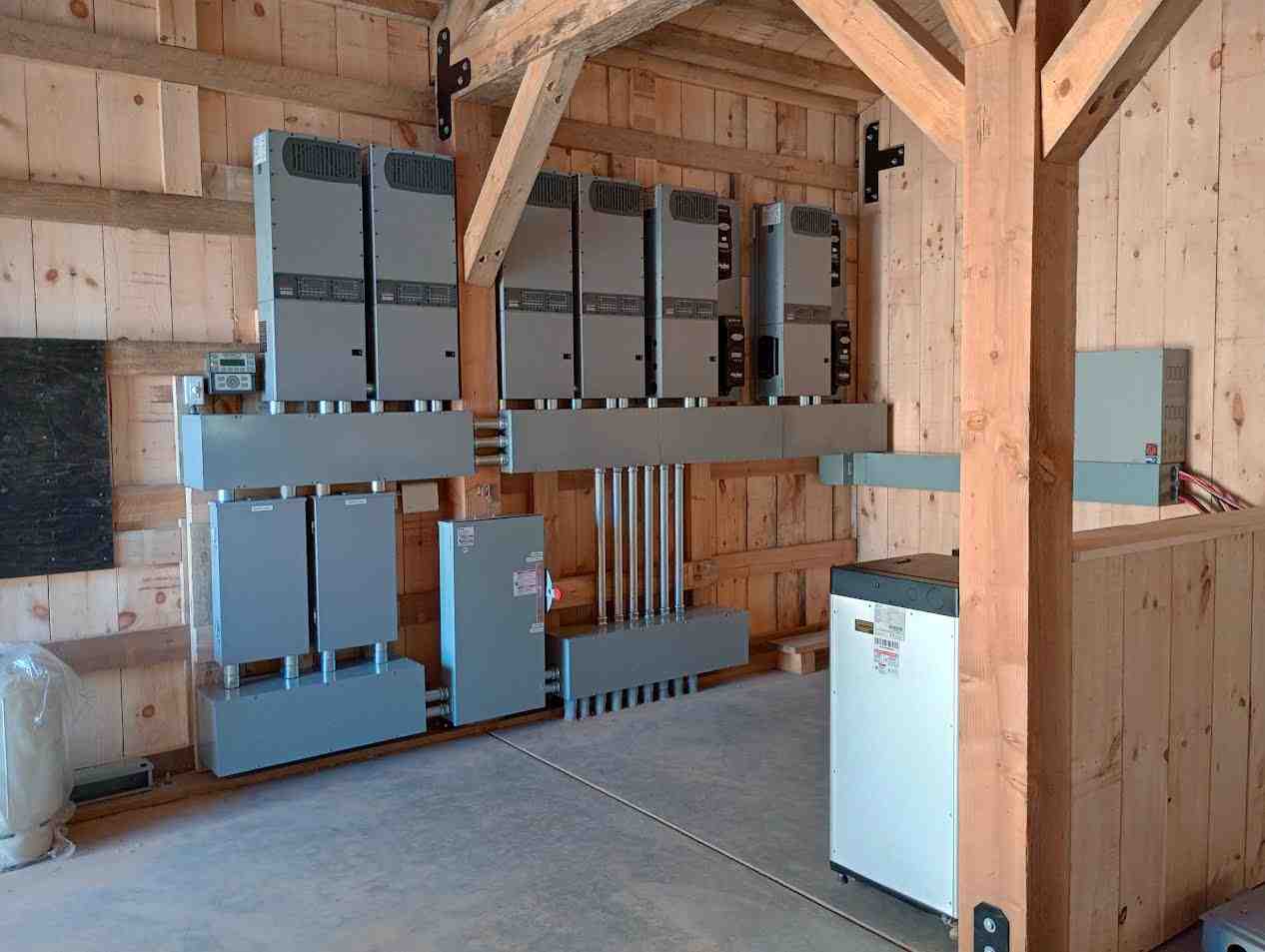
Think of commercial solar battery installation as adding a smart energy vault to your business. While your solar panels work hard during the day collecting sunshine, your battery storage system captures that energy and saves it for exactly when you need it most – whether that’s during expensive peak hours or when the power grid goes down.
The magic happens through a beautifully coordinated dance between your solar PV system and your battery energy storage system (BESS). Your solar panels generate DC power throughout the day, and instead of sending all that valuable energy back to the utility company for pennies on the dollar, your batteries store it right on-site. When your business needs power, inverters convert that stored DC electricity into AC power that runs your operations smoothly.
The Battery Management System (BMS) acts like the conductor of this energy orchestra, constantly monitoring everything from battery health to charge levels. This intelligent system ensures your investment stays protected while maximizing performance day after day. You can learn more about how battery energy storage systems work to understand the technical details behind this process.
What makes modern commercial battery systems truly impressive is their seamless grid interaction. During peak solar production, your system automatically powers your business first, then charges your batteries with surplus energy. If there’s still excess power after both needs are met, only then does it flow back to the grid. When solar production drops or your energy demand increases, the system switches to stored battery power without missing a beat.
The Core Components of Your System
Every successful commercial solar battery installation relies on several key components working together like a well-oiled machine. Understanding these parts helps you appreciate the sophistication behind your energy independence.
Solar panels form the foundation, converting sunlight into DC electricity throughout the day. Commercial-grade batteries store this energy for later use, with lithium solar batteries leading the pack for their superior performance and longer lifespans compared to older battery technologies.
Hybrid inverters serve as the conversion hub, changing DC power from both your solar panels and batteries into AC power your business actually uses. The system controller orchestrates all these components, making split-second decisions about energy flow based on your consumption patterns, utility rates, and battery charge levels.
Monitoring software gives you complete visibility into your system’s performance, letting you track energy production, consumption, and savings in real-time. This data becomes invaluable for optimizing your energy usage and spotting opportunities for additional savings.
Racking and mounting hardware secures everything in place, designed to withstand local weather conditions while maximizing solar exposure throughout the day. These components might seem simple, but they’re engineered to protect your investment for decades.
The Daily Cycle: From Sunlight to Stored Power
Watching your commercial solar battery system work throughout the day is like observing a perfectly choreographed performance. Each phase serves a specific purpose in maximizing your energy savings and operational resilience.
Daytime generation begins as morning sunlight hits your solar panels, creating DC electricity that flows directly to power your operations. As solar production increases and exceeds your current consumption, the system automatically begins charging batteries with surplus energy. There’s no waste, no missed opportunities – just intelligent energy management.
Peak production typically occurs during midday when your solar generation is highest. Your system prioritizes powering your business first, then rapidly charges your batteries to full capacity. This is where the real value becomes apparent – instead of sending excess energy back to the grid at reduced rates, you’re storing it for your own use.
Evening discharge begins as afternoon transitions to evening and solar production decreases. Your system seamlessly switches to stored battery power, ensuring uninterrupted operations while avoiding expensive peak utility rates. This transition happens automatically and instantaneously.
Overnight power continues flowing from your batteries when solar panels aren’t producing. The system’s intelligent management ensures optimal battery discharge rates while maintaining reserve capacity for emergency backup power.
Automated system management eliminates the need for manual intervention while maximizing your energy savings around the clock. This seamless energy transition means you can focus on running your business while your solar battery system handles the complex task of optimizing your energy usage and costs.
The Financial Case: Maximizing ROI with a Commercial Solar Battery Installation

When it comes to commercial solar battery installation, the balance sheet benefits are often the deciding factor. Typical projects in Northern California deliver 15-25 % annual ROI, an extraordinary figure compared with most capital improvements. Lower operating expenses, predictable energy pricing, and a long-lived asset that boosts property value all contribute to these results.
Corporate finance teams especially appreciate the way storage flattens utility rate volatility. By producing and storing your own power on-site you effectively purchase electricity at a known, fixed cost for decades. Add the 30 % Federal Solar Investment Tax Credit (ITC), accelerated depreciation, and state or utility rebates, and many installations recover their net cost within 5–7 years.
For a deeper dive into the numbers, this comprehensive guide explains commercial and industrial solar economics in detail.
Slashing Costs by Managing Demand Charges and Peak Shaving
In many utility territories, demand charges—fees based on your single highest 15- or 30-minute power spike each billing cycle—can represent up to 50 % of a commercial bill. Batteries eliminate those spikes. When site load ramps toward an expensive threshold, stored solar power discharges automatically, a practice called peak shaving.
You can also shift loads away from the most expensive time-of-use periods. For instance, a winery can press grapes at midday using direct solar energy, then rely on stored power to chill tanks during the pricey evening window. The Department of Energy notes that peak demand often appears late afternoon—exactly when a charged battery shines.
Real-world savings regularly reach 50-70 %, and some optimized facilities approach 90 % bill reductions.
Leveraging Tax Credits, Incentives, and Financing
Key incentives dramatically reduce net cost:
- 30 % Federal ITC – a dollar-for-dollar tax credit.
- MACRS accelerated depreciation – write off ~85 % of system cost in year one.
- California SGIP rebates – additional dollars for battery capacity.
- Utility demand-response programs – earn revenue by letting the grid tap your battery during regional peaks.
Financing tools fit nearly every balance sheet. Direct ownership maximizes long-term savings. A Power Purchase Agreement (PPA) avoids upfront capital: a third party finances the equipment, and you simply buy the lower-cost electricity it produces.
For a menu of current incentives, see this resource on solar financing & incentives.
The Step-by-Step Commercial Solar Installation Process

Pure Power Solutions has honed commercial solar battery installation into a predictable, three-phase workflow. Clear milestones keep your operations humming while we handle the heavy lifting.
Phase 1: Consultation, Site Assessment, and System Design
- Findy meeting – clarify energy goals, budget, and timeline.
- Data analysis – review 12–36 months of utility bills to map loads and demand charges.
- Structural & shading study – verify roof integrity or identify ground-mount options; 3-D modeling pinpoints optimal panel placement.
- Custom engineering – size the PV array and battery capacity to meet your financial and resilience targets.
Phase 2: Engineering, Permitting, and Installation
- Stamped drawings detail electrical and structural specifications for local authorities.
- Permit management – we submit and track every application with Sonoma, Napa, Lake, or Mendocino county agencies.
- Procurement & scheduling – high-quality panels, inverters, and Battery Storage Systems arrive just-in-time to minimize on-site disruption.
- Rapid installation – certified crews follow strict safety protocols; most commercial rooftops are completed in days, not weeks.
Phase 3: Commissioning, Interconnection, and Activation
- System testing – confirm wiring, inverter performance, battery response, and monitoring accuracy.
- Inspections & utility sign-off – we coordinate all walkthroughs and documentation for a smooth interconnection agreement.
- Go-live & training – once approved, we energize the system, review the monitoring dashboard with your team, and hand over a concise maintenance guide.
From first call to flipped switch, the entire process typically spans 3–6 months, with your staff engaged only when decisions or brief access are required.
Beyond Savings: Enhancing Business Resilience and Sustainability

Slashed utility bills are great, but commercial solar battery installation really proves its worth when the grid goes down or stakeholders scrutinize sustainability performance.
Achieving Uninterrupted Operations with Reliable Backup Power
Wildfire-related shutoffs and unexpected outages are common across Sonoma, Napa, Lake, and Mendocino counties. A properly sized battery takes over in milliseconds, keeping POS systems, refrigeration, servers, and safety equipment online without the noise or maintenance burden of diesel generators. Critical loads can run for hours or days, depending on battery capacity and ongoing solar input, giving you a decisive edge when competitors sit in the dark.
Meeting Sustainability Goals and Boosting Your Brand
According to the U.S. Environmental Protection Agency, every kilowatt-hour of solar electricity avoids roughly one pound of CO₂. Over its life, a mid-size commercial array can offset millions of pounds of emissions. Those numbers translate directly into ESG reports, LEED points, and powerful marketing narratives. Customers and top talent alike gravitate toward companies that demonstrate authentic climate action.
Your rooftop array is a billboard of environmental leadership—and a daily reminder that your business invests in the community’s clean-energy future.
Frequently Asked Questions about Commercial Solar Battery Installation
How much does a commercial solar battery installation cost?
The cost of commercial solar battery installation varies significantly based on your specific needs, but I always tell my clients to think beyond the initial price tag. System size, battery technology, site complexity, and local factors all influence pricing, with installations typically ranging from $100,000 to $500,000 or more for larger commercial systems.
What really matters is the long-term return on investment rather than just the upfront cost. When you factor in the substantial incentives available today, the picture becomes much brighter. The 30% federal tax credit alone can save you tens of thousands of dollars, and when combined with accelerated depreciation benefits and state or local rebates, many businesses see their effective system cost reduced by 40-50% or more.
Most of our commercial clients achieve payback periods of 5-7 years, followed by 25+ years of continued energy savings. That’s decades of predictable, reduced operating costs that improve your bottom line year after year.
Financing options make these systems accessible to businesses of all sizes. Power Purchase Agreements (PPAs) eliminate upfront capital requirements entirely, allowing you to start saving on day one with predictable monthly payments. This approach has helped many of our clients in Sonoma, Napa, Lake, and Mendocino counties implement solar and battery systems without straining their cash flow.
How long do commercial solar batteries and panels last?
This is one of my favorite questions because the answer showcases just how solid these investments really are. Commercial solar panels are built to last 30-40 years with minimal performance degradation. Most manufacturers back this up with 25-year warranties guaranteeing 80-85% of original performance after two decades of operation.
I’ve seen systems from the early days of my career still producing strong energy output well beyond their warranty periods. The durability of modern panels is truly impressive, especially when you consider they’re designed to withstand decades of weather exposure.
Commercial batteries typically come with 10-15 year warranties or a specified number of charge and discharge cycles, usually 4,000-6,000 cycles. The advanced lithium-ion batteries we install often exceed these warranty periods, with many systems operating effectively for 15-20 years or more.
System longevity depends on several factors: battery technology, usage patterns, environmental conditions, and proper maintenance. The good news is that modern battery management systems do most of the heavy lifting, automatically optimizing charging and discharging to maximize lifespan while monitoring system health to predict maintenance needs.
Can I add battery storage to an existing commercial solar system?
Absolutely! This is called retrofitting, and it’s often one of the most cost-effective ways to improve your existing solar investment. AC-coupled systems allow us to add batteries to your current setup without replacing your existing solar inverters or making major modifications to your system.
The beauty of AC-coupling is its flexibility. These systems connect batteries to your facility’s AC electrical system, allowing them to charge from both solar production and grid power when it’s advantageous. This opens up sophisticated energy management strategies while preserving every dollar you’ve already invested in solar.
A qualified installer can assess your current system and design the most efficient and cost-effective battery integration approach for your specific situation. We look at factors like available space, electrical capacity, and your energy goals to determine the optimal retrofit strategy.
Having retrofitted numerous commercial systems throughout Northern California, I can tell you that most existing solar installations are excellent candidates for battery addition. The process is typically straightforward, and the improved energy independence and cost savings make it a smart business decision.
Conclusion
Commercial solar battery installation represents more than just an energy upgrade—it’s a strategic investment that transforms how your business manages costs, operates during challenging times, and contributes to a sustainable future. The technology has evolved from an experimental concept to a proven solution that delivers measurable returns while protecting your operations from an increasingly unreliable grid.
The financial benefits speak for themselves. Through intelligent demand charge management and peak shaving strategies, businesses across Northern California are cutting their electricity bills by 50-90% while building long-term asset value. When you combine the 30% federal tax credit with accelerated depreciation benefits, most systems pay for themselves within 5-7 years—then continue delivering savings for decades.
But the value extends far beyond the monthly utility bill. In an era where power outages and grid instability threaten business continuity, commercial battery systems provide the energy resilience that keeps your operations running when others shut down. Whether it’s a planned Public Safety Power Shutoff or an unexpected grid failure, your stored solar energy becomes a competitive advantage that protects revenue and maintains customer service.
For businesses in Sonoma, Napa, Lake, and Mendocino counties, this technology offers particular value. Local utility rate structures, frequent power outages, and strong community support for renewable energy create an ideal environment for commercial solar battery installation. The systems integrate seamlessly with existing operations while positioning your business as an environmental leader in your community.
The sustainability benefits resonate with customers, employees, and stakeholders who increasingly expect businesses to demonstrate genuine environmental commitment. Your solar installation becomes a visible symbol of your values while contributing to LEED certification goals and corporate social responsibility initiatives.

At Pure Power Solutions, we’ve witnessed the change that commercial solar battery installation brings to businesses over our 30+ years in the renewable energy industry. From small wineries to large manufacturing facilities, we’ve seen how the right system design and professional installation creates lasting value that extends far beyond energy savings.
The future belongs to businesses that take control of their energy destiny. Rising utility costs, grid instability, and environmental regulations aren’t temporary challenges—they’re the new reality that forward-thinking companies are already addressing through intelligent energy management systems.
Your commercial solar battery installation becomes a cornerstone of business resilience, providing predictable energy costs, reliable backup power, and environmental leadership that attracts customers and top talent. The technology has matured to deliver reliable, cost-effective solutions that integrate seamlessly with your operations while supporting your long-term business goals.
Take control of your energy future. Contact our experts to learn more about our Commercial Solar Installers services and get a custom proposal for your business. Let us show you how commercial solar battery installation can transform your energy costs, operational resilience, and environmental impact while delivering the financial returns your business deserves.


