

Understanding the Bottom Line: What is the Average Cost of Commercial Solar Installation?
The average cost of commercial solar installation is the first number most executives want to see. Think of it as a quick financial snapshot: know the range, check incentives, then decide whether a deeper dive makes sense.
![Infographic: A graph illustrating the steady decrease in commercial solar installation costs per watt over the last decade, with data points from 2013 to 2023. Alt text: “Infographic showing the declining cost per watt of commercial solar installations from 2013 to 2023.”]
Dollars-Per-Watt in Plain English
- Industry yardstick for pricing
- Typical sizes we build: 10 kW–2 MW (larger sites see bigger discounts)
- Price window before incentives: $1.83–$3.50 per W
- After the 30 % Federal ITC and local rebates: $1.20–$1.75 per W
- Source: SEIA Solar Market Insight, 2023
What Those Watts Mean in Dollars
- 25 kW (small warehouse): ≈ $46k–$65k before credits
- 100 kW (light manufacturing): ≈ $180k–$260k before credits
- 250 kW+ (large facility): starts around $400k, drops fast with scale
A brief utility-bill and roof assessment tells us whether your numbers will land at the low or high end of these ranges. See how we size systems.
Deconstructing the Price: A Breakdown of Commercial Solar System Costs

When businesses ask about the average cost of commercial solar installation, they’re often surprised to learn that solar panels themselves represent only about 35-40% of the total investment. A commercial solar project is like building a house—you need a solid foundation, quality materials, and skilled craftspeople to create something that will serve you well for decades.
Understanding where every dollar goes helps you make smart decisions about equipment choices and project scope. Think of it as opening the hood of your car—once you see how all the parts work together, you can better appreciate the value of each component.
Hardware: The Core Components
Solar panels are the stars of the show, accounting for 35-40% of your total cost. When you’re investing in panels, you’re essentially buying a 25-year electricity contract at today’s prices. The choice between monocrystalline and polycrystalline panels is like choosing between a luxury sedan and a reliable compact car—both will get you where you need to go, but with different levels of efficiency and cost.
Monocrystalline panels offer efficiency ratings of 20% or more but typically cost $1.00 to $1.50 per watt. These sleek, dark panels perform better in limited space and hot weather conditions—perfect for businesses in Sonoma and Napa counties where roof space might be at a premium.
Polycrystalline panels provide 15-17% efficiency at $0.50 to $1.00 per watt. They’re the practical choice for businesses with plenty of roof space who want to maximize their budget. The efficiency difference means you’ll need about 15% more roof space to generate the same amount of electricity.
We always recommend Tier-1 panels from reputable manufacturers. These panels come with robust warranties—typically 10 years for material defects and 25-30 years for performance guarantees. After 25 years, quality panels still maintain at least 80% of their original efficiency, which means your investment keeps paying dividends well into the future.
Inverters are the unsung heroes of your solar system, converting the DC electricity from your panels into the AC electricity your business uses. They represent 20-25% of your total cost, making them the second-largest expense after the panels themselves.
String inverters are the workhorses of most commercial installations. They’re cost-effective and reliable, handling multiple panels connected in series. Think of them as the conductor of an orchestra—they coordinate all the panels to work together harmoniously.
The quality of your inverter directly impacts your system’s performance and longevity. Quality inverters typically come with 10-year warranties that can often be extended to 25 years. Since inverters generally need replacement every 10-15 years, this is an important factor in your long-term maintenance planning.
Racking and mounting systems secure your panels to your roof or ground structure. The mounting system might seem like a simple component, but it’s actually engineered to withstand decades of weather extremes—from scorching summer heat to winter storms.
Roof-mounted systems vary significantly in complexity and cost depending on your roof type. Rail-mounted systems offer maximum flexibility for complex roof configurations but can cost nearly double that of direct-attach systems. However, they provide better ventilation and easier maintenance access.
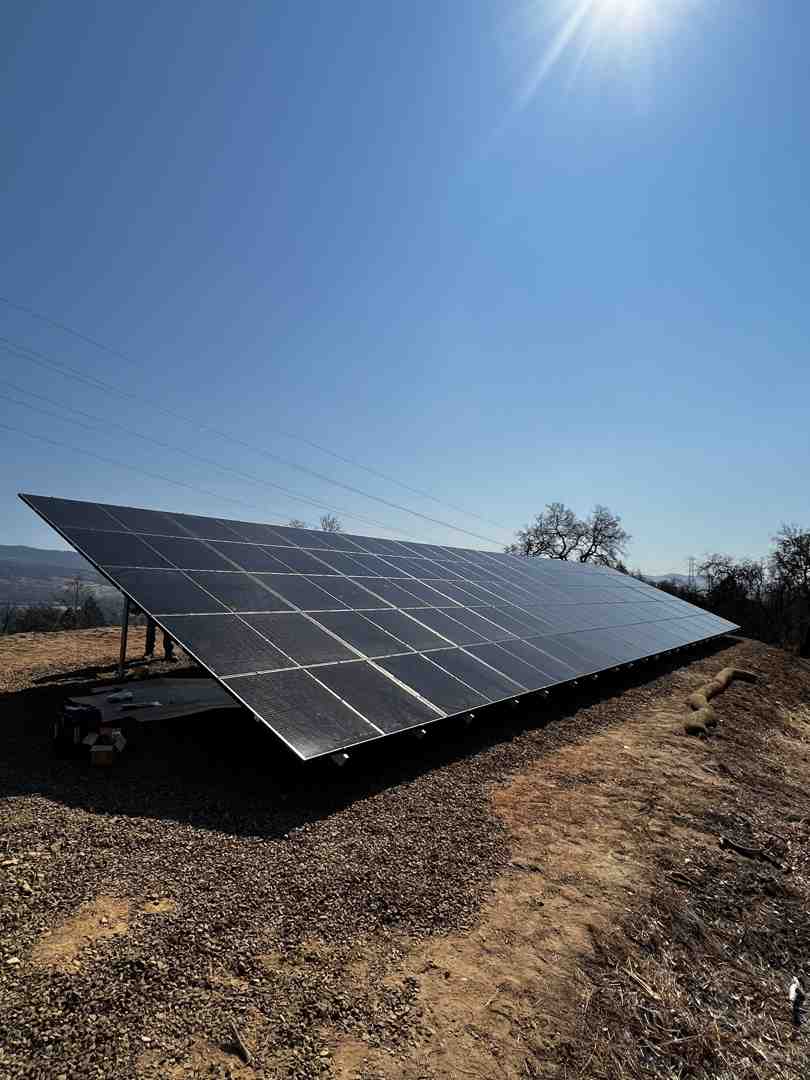
Ground-mount systems require more materials and labor but offer optimal panel positioning and easier maintenance access. The choice between fixed-tilt and tracking systems depends on your available space and budget. Tracking systems can increase energy production by 15-25% but add complexity and cost to your installation.
Solar battery storage is an optional upgrade that can increase your total system cost by $15,000 or more, but it delivers significant benefits. Battery storage provides backup power during outages, helps reduce peak demand charges, and gives you greater energy independence. For businesses with critical power needs or high demand charges, battery storage often improves the overall return on investment.
According to Architizer’s guide to photovoltaics, the integration of battery storage with commercial solar systems is becoming increasingly popular as battery costs continue to decline and utility rate structures evolve to favor energy storage.
Soft Costs: Services and Labor
Installation labor represents 15-20% of your total cost, and this is where experience really matters. Professional installation by certified electricians is essential for system safety, performance, and warranty compliance. In California, solar installation personnel must be certified electricians, ensuring your system meets all electrical codes and safety standards.
The labor component includes everything from site preparation and panel mounting to electrical connections and system commissioning. A skilled installation team can complete most commercial projects in 1-3 days, minimizing disruption to your business operations.
Engineering and design work accounts for about 5% of your total cost, but it’s the foundation that everything else builds upon. Every commercial solar system requires custom engineering, including structural analysis of your roof, electrical system design, and energy production modeling.
This phase ensures your system is optimized for your specific site conditions and energy needs. Poor design can cost you thousands in lost energy production over the system’s lifetime, so this investment in professional engineering pays dividends for decades.
Permitting and interconnection typically represents 1-5% of your total cost, though the percentage varies significantly based on your local jurisdiction and utility company requirements. Municipal permits typically range from $300-$2500, while utility interconnection studies can add significant costs for larger systems.
The permitting process can take 4-6 weeks, so proper planning is essential. Working with experienced installers who understand local requirements can help streamline this process and avoid costly delays.
Supply chain and logistics might seem like a background function, but it’s crucial for keeping your project on schedule and within budget. This includes everything from initial equipment procurement to final system commissioning and performance verification.
Coordinating equipment delivery, managing inventory, and ensuring timely installation requires careful logistics management. Supply chain disruptions can delay projects by weeks or months, which is why working with established installers with strong supplier relationships is so important.
Key Factors That Influence Your Final Solar Investment
When I walk through a commercial facility with business owners, I often hear the same question: “Why do solar quotes vary so much between companies?” The truth is, no two commercial solar projects are identical. Your average cost of commercial solar installation depends on a unique combination of factors specific to your business, building, and energy needs.
Think of it like buying a custom suit versus one off the rack. While we can provide general pricing guidelines, your final investment depends on the specific requirements of your facility and the choices you make along the way. Understanding these variables helps you make informed decisions and avoid surprises during the installation process.
Your Facility’s Energy Profile and Location
Your electricity bills tell a story about your business operations, and we read that story carefully to design the right solar system for you. Annual electricity consumption analysis forms the foundation of every commercial solar project. We examine 12-24 months of utility bills to understand your energy patterns, seasonal variations, and peak demand charges.
Many business owners are surprised to learn that peak demand charges can represent 30-70% of their monthly electricity bill. These charges are based on your highest 15-minute power usage during the month, and they can make solar particularly attractive for businesses with high energy demands. Solar production typically peaks during expensive afternoon hours when demand charges are highest, providing excellent savings opportunities.
Time-of-use rates add another layer to your solar economics. In many areas, electricity costs more during peak hours when solar panels produce the most power. This alignment between solar production and expensive grid electricity creates additional savings beyond simple kilowatt-hour reductions.
Location plays a crucial role in both system performance and costs. Sonoma County receives an average of 325-333 days of sunshine annually, providing excellent conditions for commercial solar installations. Napa County’s similar climate conditions make it equally attractive for businesses considering solar. Lake and Mendocino counties offer strong solar resources with slightly different seasonal patterns that we factor into system design.
Local utility rates significantly affect your solar economics. According to the U.S. Energy Information Administration, California commercial electricity rates have increased by 3.5% annually over the past decade, with some areas experiencing increases up to 23% in recent years. This trend makes solar’s fixed-cost electricity increasingly attractive as a hedge against rising utility rates.
Physical Site and Equipment Choices
Your building’s characteristics have a major impact on installation complexity and costs. Roof type and condition represent one of the most significant variables in commercial solar pricing. Flat commercial roofs are generally easier and less expensive to work with than complex pitched roofs with multiple angles, vents, and penetrations.
Roof age and structural capacity often surprise business owners with their impact on project costs. Most commercial roofs can support 2-4 pounds per square foot of additional weight from solar panels and mounting systems. However, older roofs may require structural upgrades or even replacement before solar installation, adding significant costs to your project.
We always recommend having a structural engineering assessment performed to determine your roof’s capacity and identify any necessary reinforcements. This small upfront investment can prevent costly surprises later in the project and ensure your solar system is safely installed.
Ground-mount alternatives offer a solution when roof installation isn’t feasible. While ground-mount systems typically cost more due to additional materials and site preparation, they provide several advantages including optimal panel orientation, easier maintenance access, and no concerns about roof warranty issues.
Equipment quality and brand choices significantly affect both upfront costs and long-term performance. Premium efficiency panels can cost 25% more than standard panels but generate more electricity in limited space. This trade-off becomes particularly important when roof space is limited or when you want to maximize energy production.
Panel and inverter warranties vary significantly between manufacturers and affect long-term value. Tier-1 panels typically offer 10-year material warranties and 25-30-year performance guarantees, while budget panels may offer shorter coverage periods. Similarly, quality inverters come with 10-year warranties that can be extended to 25 years, providing peace of mind for your long-term investment.
System complexity adds another cost variable. Adding battery storage can increase your total system cost by $15,000 or more, but it provides backup power during outages and peak demand charge reduction. Advanced monitoring systems and specialized controls increase the initial investment but provide valuable operational data and improved system performance.
Our Commercial Solar Installers Services include comprehensive site assessments to determine the optimal equipment and installation approach for your specific facility. We take the time to understand your unique requirements and recommend solutions that maximize your return on investment while meeting your operational needs.
Maximizing Your Return: Incentives, ROI, and Long-Term Benefits
A solid commercial system is less an expense than a 25-year cash-flow machine. Here are the levers that make the math work.
Incentives That Cut Day-One Cost
- 30 % Federal Investment Tax Credit (ITC): Dollar-for-dollar credit on total project cost. A $200k system nets a $60k credit.
- MACRS depreciation: Recover ~85 % of the project’s value in five years; ~40 % in year one.
- Local utility programs: Sonoma Clean Power, PG&E, and other Northern California utilities periodically offer per-watt or demand-reduction rebates.
Typical ROI & Payback
- Payback window: 5–7 years in most Sonoma, Napa, Lake, and Mendocino installations.
- Levelized cost of energy (LCOE): $0.06–$0.08 /kWh, often half of current commercial rates.
- Example: 100 kW array costing $238,600 drops to ≈ $114k after the ITC. With $20k annual savings, payback is 5.7 years; years 6–25 are virtually free power.
Beyond the Balance Sheet
- Inflation hedge: While utility rates climbed 3–5 % per year over the past decade, your solar rate stays flat.
- Property value lift: Solar-equipped buildings list and sell faster because buyers inherit lower operating costs.
- Sustainability cred: A 100 kW array avoids ~150,000 lbs of CO₂ annually—numbers that bolster ESG reports and marketing. IBM found 77 % of consumers favor sustainable brands.
Solar isn’t a feel-good line item; it’s a proven strategy for controlling one of your largest variable costs while meeting public sustainability expectations.
Financing Your System and Planning for the Future
| Financing Option | Ownership | Up-front $ | Incentive Eligibility | Typical ROI | Notes |
|---|---|---|---|---|---|
| Cash Purchase | You | Highest | Yes | Fastest | Full control, no interest |
| Solar Loan | You | Low/Med | Yes | High | Keeps capital free; 5–20 yr terms |
Table: Cash vs. loan—two proven paths to own your energy production.
Cash vs. Loan—Which Fits?
- Cash maximizes net savings and grabs every tax benefit. Payback 4–6 yrs is common.
- Loans (3–8 % APR) often deliver immediate positive cash flow when the monthly payment < utility savings. Review dealer fees (sometimes 15–20 %) before signing.
Ongoing Costs (Spoiler: They’re Small)
- Annual cleaning & inspection: $0–$2,000 depending on array size and dust levels.
- Monitoring software: Usually bundled; alerts you if output drifts.
- Inverter swap: Budget $0.25–$0.50/W once every 10–15 years.
- Tier-1 panels carry 25–30 yr performance warranties, and workmanship coverage from Pure Power Solutions lasts 5–10 yrs. Plan, budget, and move on—solar rarely pulls you back into costly service calls.
Frequently Asked Questions about Commercial Solar Costs
How long do commercial solar panels last?
Quality Tier-1 panels come with 25-year performance guarantees and typically run 30 years or more with only 0.5–0.8 % annual degradation.
Does adding batteries make financial sense?
Batteries lift project cost by $15k–$50k but can slash demand charges 30–70 % and keep operations live during outages. They qualify for the same 30 % ITC when installed with solar, and often shorten total payback when demand fees are high.
Conclusion: Is a Commercial Solar Installation a Smart Investment for Your Business?
After three decades of helping Northern California businesses make the switch to solar energy, I can confidently say that the average cost of commercial solar installation has never been more attractive for businesses ready to take control of their energy future. The numbers speak for themselves: with costs ranging from $1.83 to $3.50 per watt before incentives and dropping to as low as $1.20-$1.75 per watt after federal tax credits, commercial solar delivers financial returns that few other business investments can match.
Think about it this way—when was the last time you found an investment that could reduce your operating expenses by 70-90% while providing a 5-7 year payback period? That’s exactly what solar offers, and it’s why savvy business owners across Sonoma, Napa, Lake, and Mendocino counties are making the switch.
The timing couldn’t be better. We’re experiencing what I call the “perfect storm” of solar opportunity: dramatically reduced equipment costs, robust federal incentives covering 30% of your installation, and utility rates that seem to climb higher every year. This combination creates an environment where solar isn’t just a nice-to-have environmental statement—it’s a smart business decision that directly impacts your bottom line.
Here’s what makes solar particularly compelling right now: the 30% federal tax credit won’t last forever, and equipment costs have stabilized at historically low levels. When you combine this with California’s excellent solar resource and favorable net metering policies, the financial case becomes almost irresistible.
But let’s be honest—solar isn’t just about the money, though the financial benefits are substantial. There’s something powerful about generating your own clean electricity and knowing you’re reducing your carbon footprint while saving money. Your customers notice these things too. In today’s market, environmental responsibility isn’t just good for the planet—it’s good for business.
The solar industry has matured significantly since I started Pure Power Solutions in 1993. The technology is proven, the installers are experienced, and the financing options are flexible. What used to be a leap of faith has become a straightforward business decision backed by decades of real-world performance data.
Every business is unique, and that’s why we take time to understand your specific energy needs, financial situation, and operational requirements. Whether you’re a small retail shop in Sonoma looking to reduce monthly expenses or a large manufacturing facility in Napa seeking to hedge against rising energy costs, there’s likely a solar solution that makes sense for your business.
The key to a successful solar investment is working with experienced professionals who understand both the technical and financial aspects of commercial installations. After helping hundreds of businesses steer this process, I’ve learned that the most successful projects start with honest conversations about goals, realistic expectations about performance, and careful attention to system design and installation quality.
Your future self will thank you for taking action now. In five years, when your system has paid for itself and you’re enjoying decades of free electricity ahead, you’ll wonder why you waited as long as you did. The businesses that have already made the switch aren’t looking back—they’re looking at their reduced utility bills and planning how to invest those savings back into growing their operations.
Ready to find how solar can transform your business’s energy costs and environmental impact? Learn how to choose the right solar company for your needs and get a complimentary quote from our commercial solar installers today. Your bottom line—and your peace of mind—will thank you for taking this important step toward energy independence.


